This past week, I was a little bit more swamped with life/work so kept the cooking more lowkey this time around. Since it was my turn on the breakfast rotation for DT, the things I made were bfast themed.
- Lemon ricotta pancakes from scratch (with homemade ricotta) from J. Kenji Lopez-Alt’s Food Lab
- Bacon egg cups (recipe here)
- Baked eggs-in-a-hole toast (recipe here)
Lemon Ricotta Pancakes
To be honest, I never quite understood the hype around lemon ricotta pancakes. My first encounter with it was when some of my friends made some for a past breakfast event and one of them, out of sheer laziness of not wanting to deal with making 4-5 more pancakes, decided to dump the remaining batter in the electric skillet to make a giant pancake, which ended up in a large, misshapen, mass of sorta-cooked-batter. In other words, the name of the recipe sounded fancy but my first impressions of it set my expectations low.
I mostly wanted to make it because I got to make my own cheese. Ricotta is a very low bar for making cheese.
Bro, what even is ricotta?
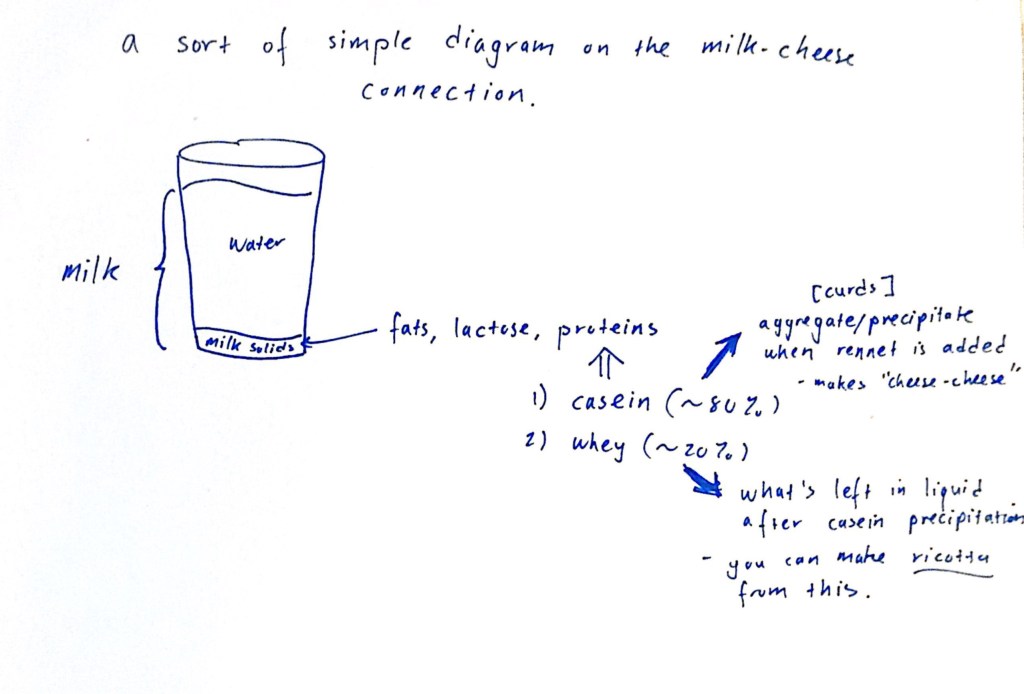
I don’t think I could even describe the flavor of ricotta if I was asked. Ricotta is Italian for “re-cooked”, which makes sense since we’re recooking and coagulating milk. But, to answer the original question, I would have to first define what cheese is.
So milk contains two main proteins: casein and whey. When milk is mixed with rennet (a set of enzymes found in certain animal stomachs, which also includes chymosin, a protease!), the casein proteins are cleaved and thus able to bond together, making curds, which can then be made into the solid cheese we know, and leaving the other protein, whey, behind in the liquid. The whey, when heated, turn into their own curds and make ricotta.
That’s pretty dang cool.
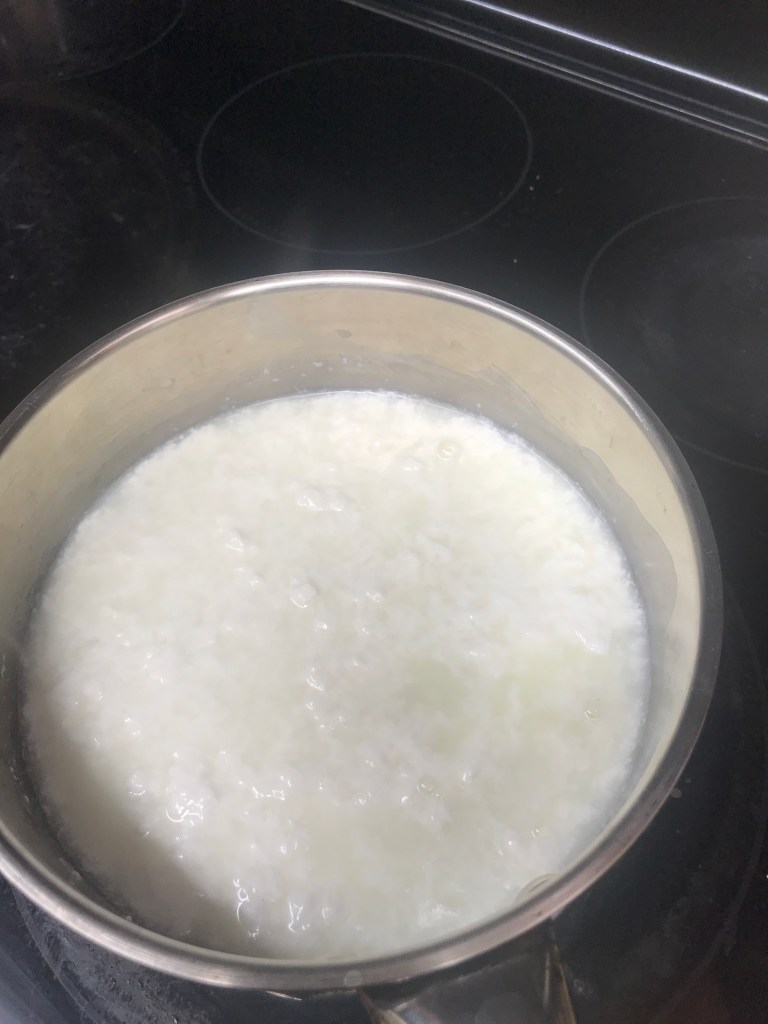
While I used the recipe from the book, the recipe that J. Kenji Lopez-Alt wrote on SeriousEats, is virtually identical. Anyway, this process of boiling milk with a bit of vinegar at 185F was pretty straightforward, as you can see below. It felt exciting to curdle milk on purpose.

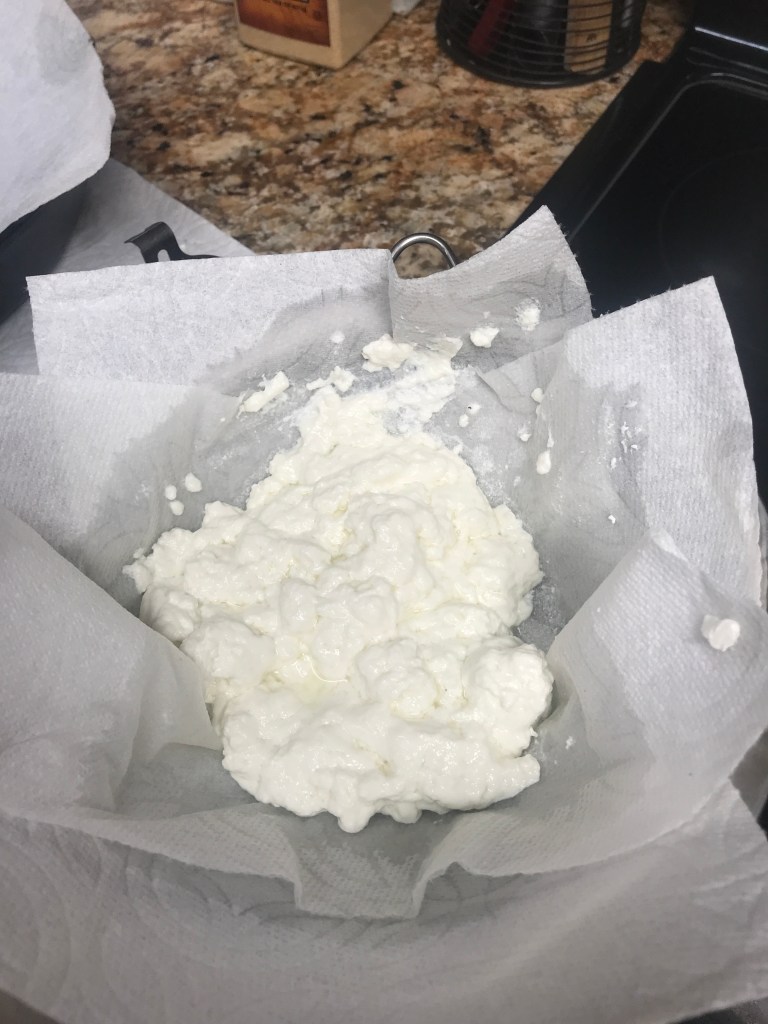
The taste of ricotta seemed to be pretty subtle, a bit milky but very muted.
I incorporated the homemade ricotta into the pancake mix with some lemon zest and got to making them. The batter was thicker/”drier”? than I expected but upon cooking them on the skillet, I noticed that the thickness helped it puff up more, and not be so flat.
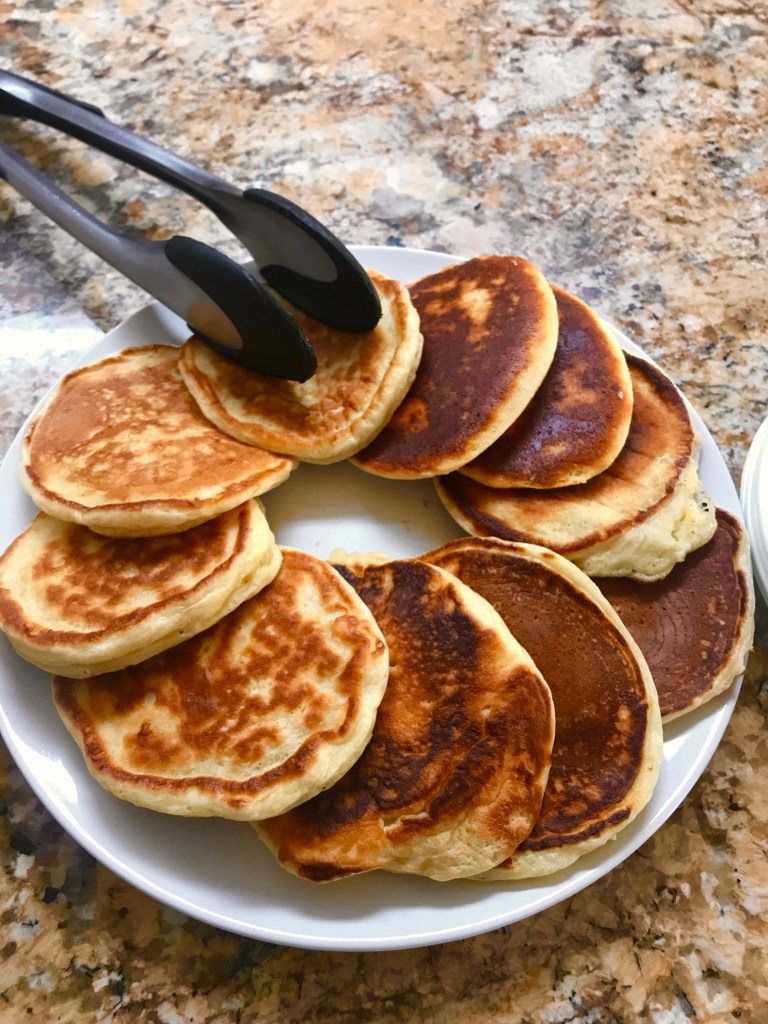
The pancakes tasted very lemon-y. I could not taste any ricotta at all. If you told me these were “lemon pancakes”, I would not have thought there would have been any ricotta at all. It was a good pancake but I wondered if it would have been better to make chiefly ricotta pancakes and make a lemon curd syrup to allow the ricotta a chance to shine and not be completely overpowered by lemons. Overall though, it was a fun experience making cheese at the very least. I would like to try making other cheese.
Other Bfast Things
The other breakfast things were pretty straightforward and easy to prep and make. The bacon I used was turkey bacon, on account of having a friend who can’t eat red meat.
I think both are quick and convenient options for breakfast with a few caveats.
Bacon Egg Cups:
I would par-bake the bacon for about 7 minutes at 375F. I would also give up trying to make the bacon fit nicely in the muffin pan before cracking an egg in the wells; the whites will leak anyway. Luckily, the bacon grease makes it relatively easy to pop out of the tins and it ended up not looking too bad, despite not being picture perfect. Thus, it’s okay if the bacon doesn’t totally surround the egg. 400F was also a little high, baking it for 10 min at 375F also seemed to get the job done if I wanted soft-boiled eggs. However, the egg residue left behind in the muffin tin is a nightmare to clean

Egg-in-a-hole toast:
This was the first time i made this, not on a pan. One thing I noticed was to butter the bread first before cutting out the holes in the bread. I also par-baked the bacon for 7 minutes again at 375F before adding it onto the bread.
I also noticed a difference of either assembling and cracking the egg in the toast the night before, in contrast to doing it on the morning of. Make sure to crack the egg on the morning of, otherwise the bottoms of the bread will be soggy and will take longer to bake.
Cooking it at 375F for 13 minutes is good for a hard boiled egg toast, but 10 min is good for a soft-boiled egg toast.

Eggs are a gift to mankind. Praise God for chickens.

 Things Nicole Tried in 2024
Leave a comment