Two weeks ago, my church had a rest/Sabbath week where we were free to catch up with our lives/people. During that week, I met up with a few of my friends for dinner at a nice Latin American/Mayan tapas restaurant. The one dish that stood out to everyone was this one called: gambas al ajillo, a.k.a. garlic shrimp. It was so well-liked that a second order was made, along with some consideration to try recreating it for the next church/team potluck. To describe what it tasted like with words other than “shrimpy” or “garlicky”, I would say that the dish reminded me of the garlic noodles one would get at a cajun boil restaurant, except with shrimp instead of noodles.
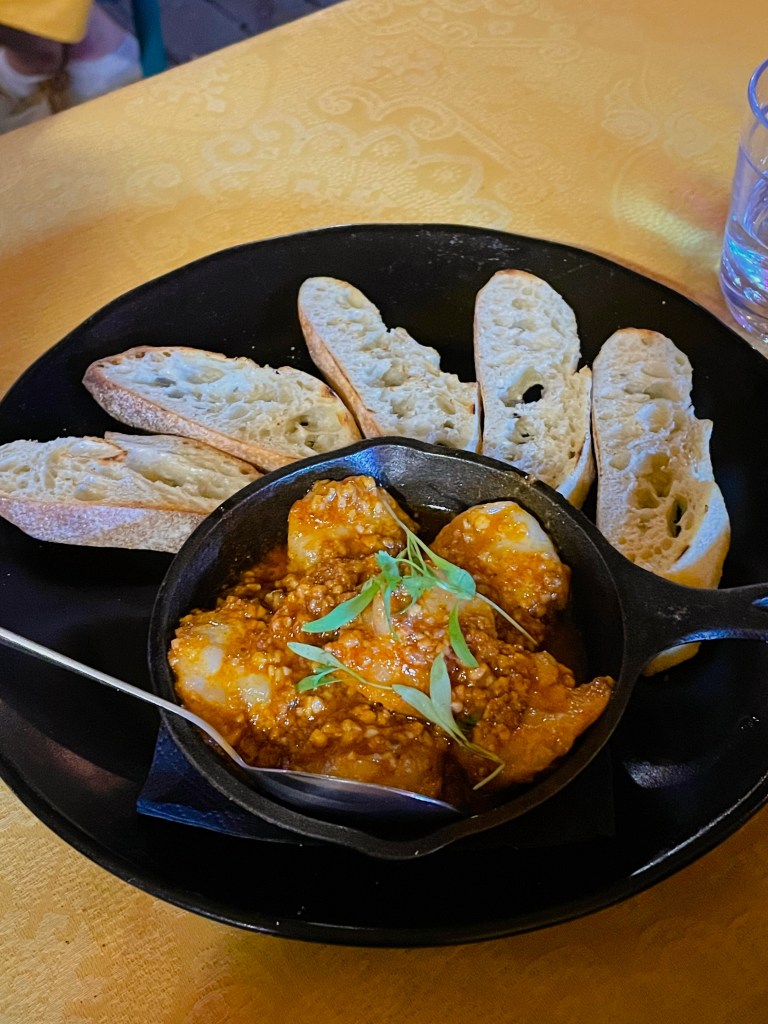
Anyway, this dish has been listed on my “to-do” for that reason. A quick Google search for a recipe led me to one written by J. Kenji Lopez-Alt on SeriousEats. For probably that one person who actually reads the starting paragraph to any of my posts, you’ve seen this guy’s name before and would know that seeing his name anywhere pretty much automatically earns my trust/approval.
Which led me to finally getting the opportunity a few days ago to try making it for a lowkey Friday potluck dinner.
So, the first thing I noticed about this recipe was that this recipe calls for a loooooooot of garlic, prepared in three different ways: sliced, minced, and smashed. After spending a considerable amount of time peeling cloves that gave me war flashbacks to garlic prepping for pad kee mao, I had my garlic all prepped and ready to go.
This dish came together pretty quickly. After handling shrimp a couple of times, I’m proud to say that I’ve come a long way since my first time handling shrimp seriously with shrimp scampi a couple of months ago. As opposed to taking an obscenely long time to deshell/devein my shrimp, I saved myself the time and got a bag of EZpeel shrimp (Shrimp Pro-tip #1: Save yourself and get a bag EZpeel shrimp). In a matter of minutes, I finished peeling a pound of shrimp and tossing the shells in a skillet. I then mixed in the peeled shrimp with the minced garlic, baking soda, some oil, and kosher salt.

Wait, baking soda?
Bruh, why are you adding baking soda to shrimp?
Welcome to the unsolicited divergent science corner that pops up occasionally on here.
Yes, I was also curious too of what baking soda can do for my crustacean friends. Turns out that baking soda could have other properties than being used as a cleaning or leavening agent.
Baking soda is first, inherently alkaline, something with a high basic pH. The fact that baking soda is basic is important when taking about something called: Maillard reaction. This is the reaction that takes us to Flavor Town, gives us that nice tasty crust on a steak, and browns our pancakes that nice golden brown color. Basically, this is the browning reaction that makes stuff taste good.
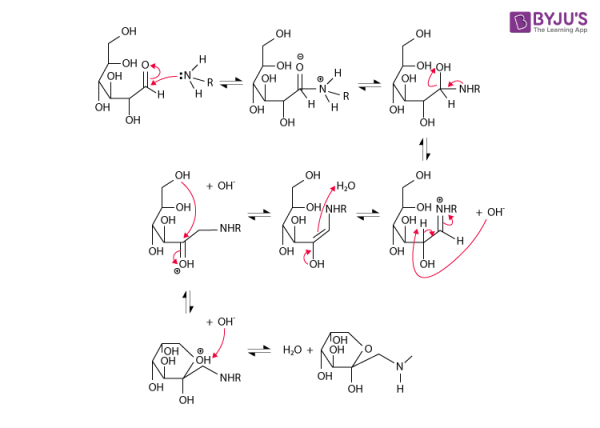
In a more scientific context, named after Louis-Camille Maillard, this reaction occurs when sugars and proteins are heated (unlike caramelization, which only involves sugars) and react with each other. Under basic conditions and the right amount of heat, the amino group of an amino acid/protein launches a nucleophilic attack on the carbonyl group of a sugar, forming intermediates that eventually breaks down to other aromatic by-products that can affect the aroma, color (mainly browning), taste, and texture of food. Understandably, because of its impact, this reaction is of much interest to many in the food science community. He who controls this reaction also can have total control over many foods’ texture/flavor profiles. More information about this could be found here and here.
So what does this have to do with shrimp? The baking soda raises the pH environment of the shrimp’s proteins and sugars (carb aspect) to be more suited for the Maillard reaction. Carrying out the Maillard reaction allows us to avoid shrimp from becoming rubbery when overcooked and also expand its flavor palette. It makes shrimp have a “crisper and snappier texture”, in the words from this post from SeriousEats.
Okay, back to making the dish.
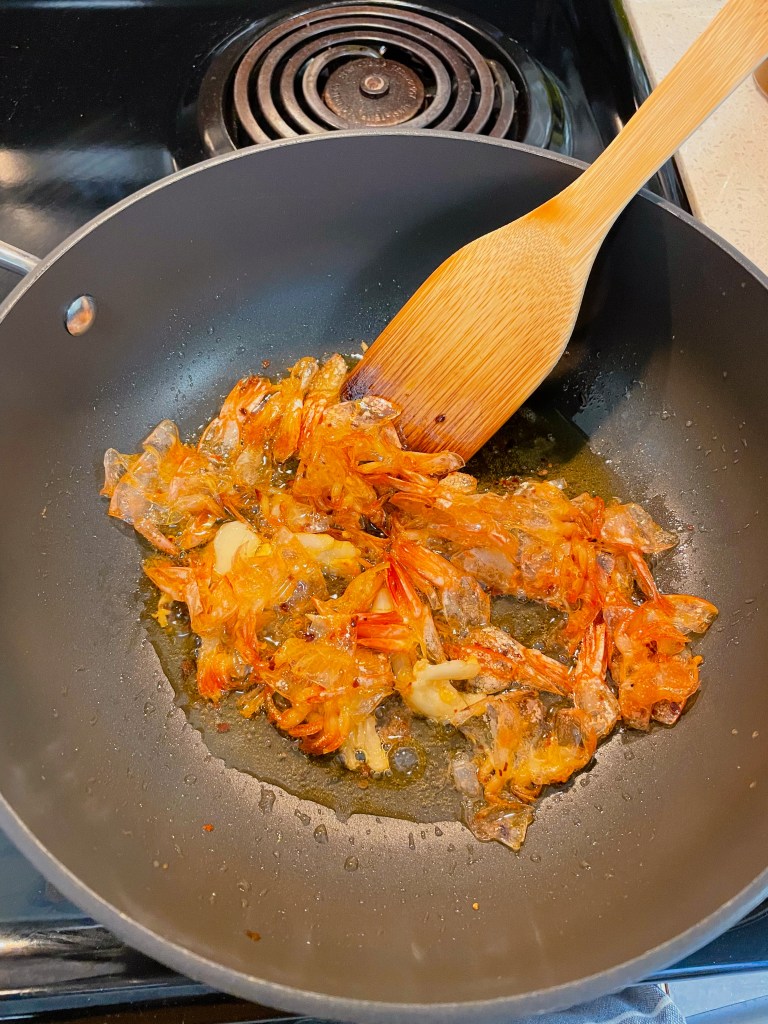
As I let that baking soda-shrimp mixture marinate, I started sautéing my shrimp shells, some red pepper flakes, and my smashed garlic cloves together (Shrimp Pro-tip #2: save and stir fry your shells and make some shrimp-infused oil, it’s worth the effort, I promise). The act of making shrimp-infused oil is something of so little effort with high reward that it was enough to convert me to EZpeel shrimp and away from pre-peeled shrimp completely. After simmering my shells in hot oil for ~10 minutes, I took out the shells and fried some garlic slices, followed by the shrimp, and finished it up with some white wine vinegar and parsley flakes. This last step was surprisingly fast, taking around 2-3 minutes.
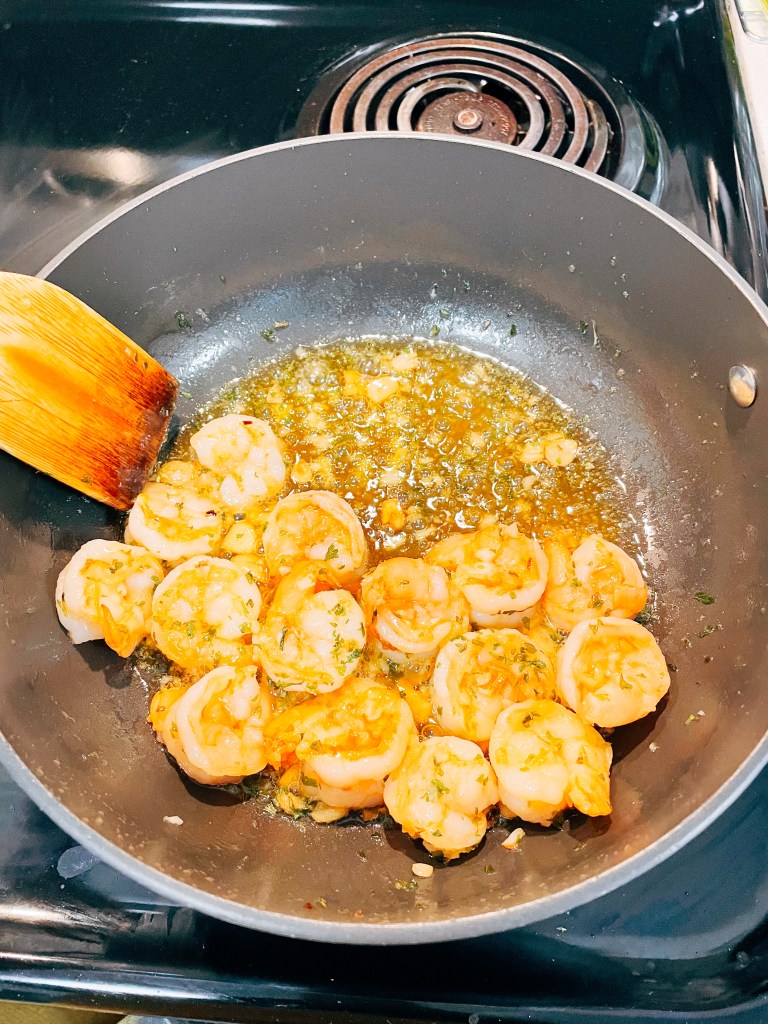
In the fashion of trying to imitate what I ate at this restaurant, I sliced up some French baguette bread and served it on the side of this dish. Unfortunately, the small cast iron skillet that I chose to serve the shrimp in was a tad too big, making my dish appear smaller than it actually was but no matter, at least there was a bit of a hint of aesthetic.

So, did it taste like the restaurant dish?
Uhh, not really. I did notice that the restaurant version seemed much more red with less oil involved, more with a paste-like consistency. The taste was also definitely different. Whatever I made was not the same process by which that dish was made. This may require me to go back and order another order of this dish for more reverse engineering exploration.
However, that being said, this dish was pretty dang good on its own. Overall, the true star of this dish was the shrimp garlic infused oil. Dude, this oil is no joke. It is so good, just dipping bread into it and eating it. This part of the dish was so good that it was worth for me to collect it as leftovers, even when all the shrimp was eaten, just so I can have more happy times eating oil-dipped bread.
This dish is the evolved and improved version of what my first attempt with shrimp scampi could’ve been. Definitely less disappointing and more pleasantly surprised.

 Things Nicole Tried in 2024
Leave a comment