In an effort to love my family this holiday break, I volunteered to make dinner for them this year.
So, I’ve never made Christmas dinner for my family before. Somehow, I settled on trying to make a prime rib roast dinner for them, using a myriad of different recipes:
- Prime Rib Roast with Red Wine Jus: This recipe by J. Kenji Lopez-Alt from SeriousEats
- Mashed Potatoes: This recipe from Natasha’s Kitchen
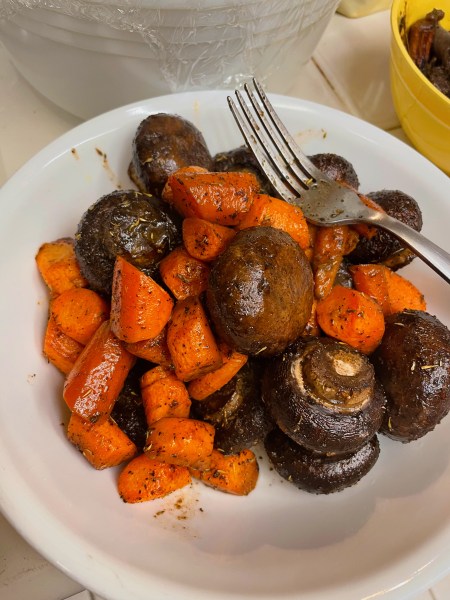
- Roasted Mushrooms and Carrots: Toss in thyme, salt, and pepper, roast at 425F for like 20 minutes.
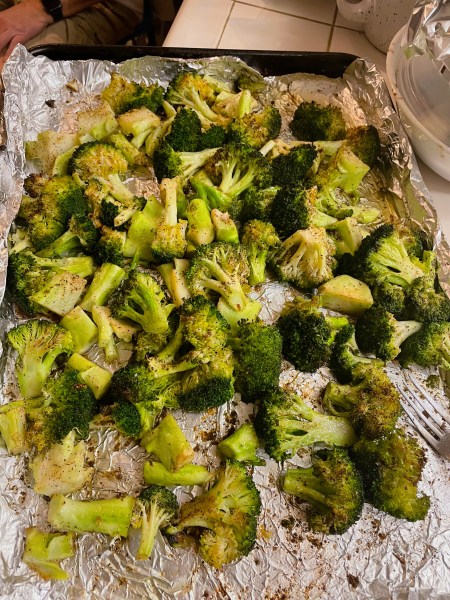
- Roasted Broccoli: Toss in salt/pepper, roast at 500F at 15 minutes.
- Portuguese Egg Tarts for Dessert: Recipe taken from Kristina Cho’s Mooncakes and Milk Bread
I don’t really know how to cook steak or beef-related things but I do like eating steak so I wasn’t really sure how this would go but I felt good, going into it.
Things about Prime Rib
Like the way I approach most things in my life, I jump into rabbit holes. First question I asked was, “What is prime rib?”
A cow has 13 ribs. Prime rib is the section that covers Rib #6 – Rib #12. This is the loin muscle of the cow, the most tender cuts, second to the filet mignon. It usually contains a generous amount of marbling or fat, which is what we need for juicier, more tender meat.
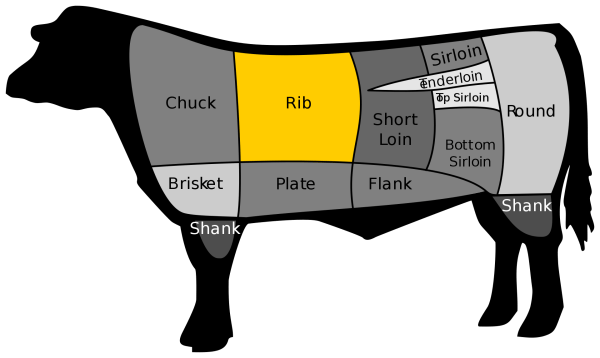
As it turns out, there’s a whole world into cooking steak/beef. I didn’t really know where to start but I feel like this post on SeriousEats covers quite a bit of ground–from explaining what prime rib is, the different grades/labeling of meat and what to look for, dry-brining meat, to the different temperatures of done-ness for prime rib.
While there are a good couple of ways to make a prime rib roast, I decided to try out the reverse-sear method, which is more detailed in this other post from SeriousEats (I really like SeriousEats, okay?). This method involves roasting the rib roast at a low temperature for a couple hours, then letting it rest, then searing it under a broiler/really high temperatures for a few minutes for a nice browned, crisp crust. The advantage of this method allows for the inside to reach to an all-around uniform temperature, and minimize the slow cooking temperature gradient that can lead to the outside being overcooked and only a portion of the inside at the desired cooking temperature. Slow-roasting for a couple hours also allows the outside of the roast to dry out, which leads to a fast and efficient searing to a well-browned crust in a couple minutes, rather than waiting for the outside moisture of a raw steak to boil off before forming the crust, which leads to a risk of overcooking.
In theory, based on what I read, this method should lead to a rib roast with minimized overcooked meat, a crisp outer crust, and a maximized, nicely pink, not overcooked meat.
The Plan
Because it wasn’t just a rib roast that I was making, I knew that I had to plan ahead to be able to successfully juggle the different aspects of this dinner.
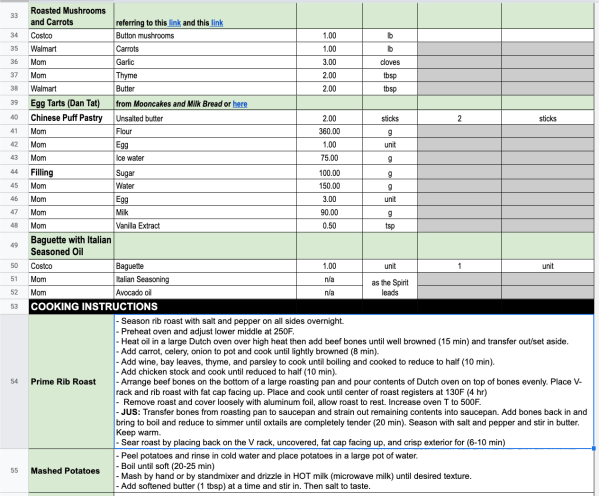
So, I made a spreadsheet for this (thank you, church, for food training), which ended up being pretty helpful since it helped me organize what I needed to get, understand the time and bandwidth needed for each aspect of the meal, and figure out what I needed to start early or can put off till later or what I can even multitask. For example, the roast was something that would require for me to start early but there was so much downtime, waiting for it to roast, where I can work on other things in the meantime.
How It Actually Went
Prime Rib Roast with Red Wine Jus
So, I actually got a boneless prime rib roast, instead of bone-in. One of the advantages of bone-in is that the bone has a higher thermal resistance than meat so any meat that is directly adjacent to the bone would cook even more slowly, leading to more flavor and tenderness. Oh well.

The day before, I seasoned the roast with some kosher salt and pepper and stuck it in the fridge, uncovered. This is called “dry-brining”. When given enough time, salt work its way into the meat via dissolving moisture and even break down some meat proteins, allowing for more salt to be absorbed into the meat and tenderizing the meat in the process too. While best to do this a couple days in advance, I figured overnight would still work. I dry-brined this roast for about 17 hours.
The next day, I started with browning about 2.5 lbs of oxtail bones (decided to just stick with one type of bone, rather than hunt for other beef bones) in a Dutch oven at medium heat (lowered from high when I noticed that things were browning way too quickly) for about 8 minutes, which was shorter than what the recipe called for. I replaced the oxtail bones with my mirepoix (two medium carrots, two ribs of celery, and 1 large onion) along with some bay leaves, thyme, and parsley and browned it for another 8 minutes. I then dumped a bottle of cheap cabernet sauvignon ($2.98 from Walmart, ayy) and reduced it to half and repeated the process with some chicken broth. This will be my jus that I will also be roasting along with my roast.
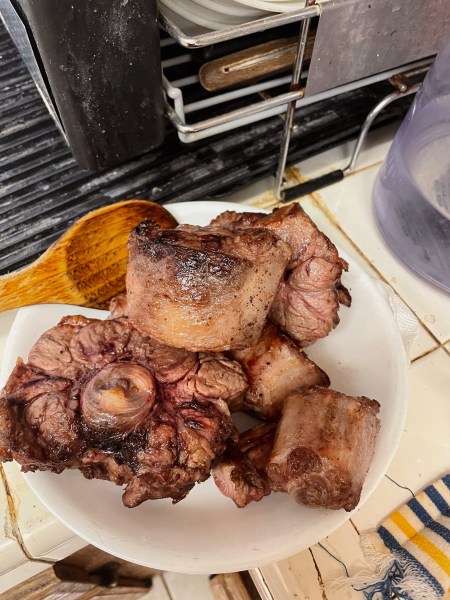

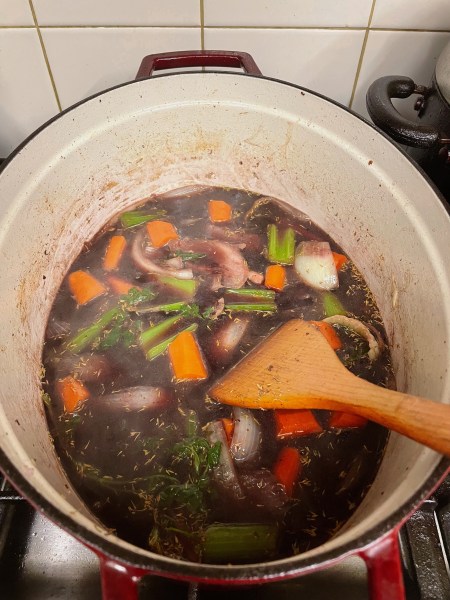
I took out my mom’s roaster and placed the oxtail bones and the jus in there. I realized that since the oxtail bones were pretty dang tall, when I placed the roasting rack on top, it was way too high to put the roast in. So, I decided to nix the tray and place the roast directly on top of the veggies and smaller oxtail ribs to clear the liquid. Though the recipe said that it would likely take 4-5 hours to cook, I decided to set the timer for 3 hours, just so I could monitor its progress and make sure I don’t overcook the roast.
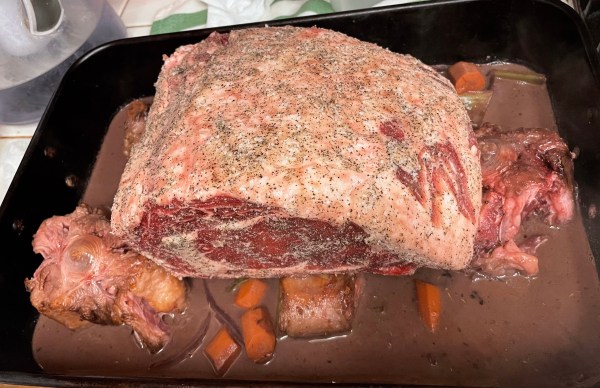
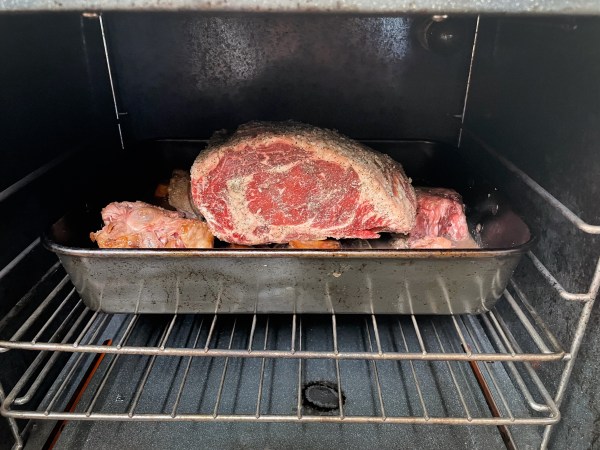
After about 3.5 hours, I decided to check on its temperature and was shocked to see that it already surpassed the 140F mark. I was aiming for 130F (medium).
Crap.
No, no, no, no, the recipe said it would take 4-5 hours. I was under time and I already overcooked it. Goes to show that you can do all the research and theoretical preparation you want but still can be caught off-guard.
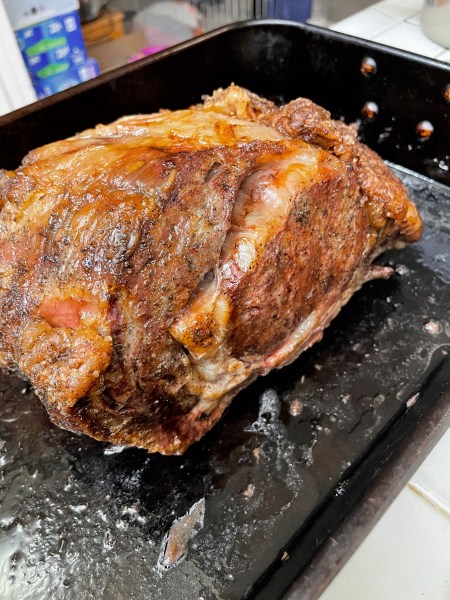
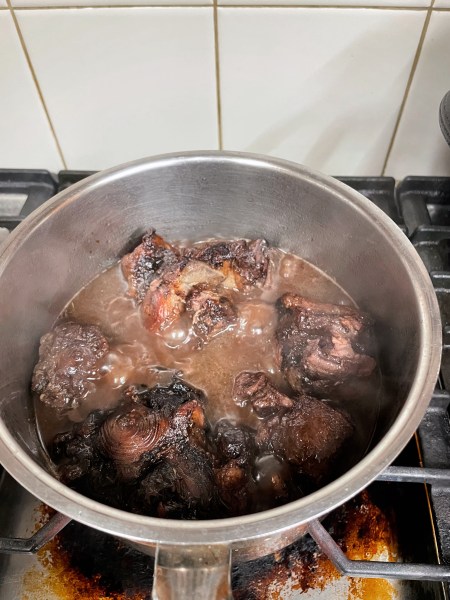
With not much of a choice, I pressed on and let the roast rest to the side while I finished up the jus. I strained out mirepoix veggies and isolated the jus and the oxtail bones. I let the jus simmer for the next 20 minutes before extracting the oxtail bones and adding butter. It was done.
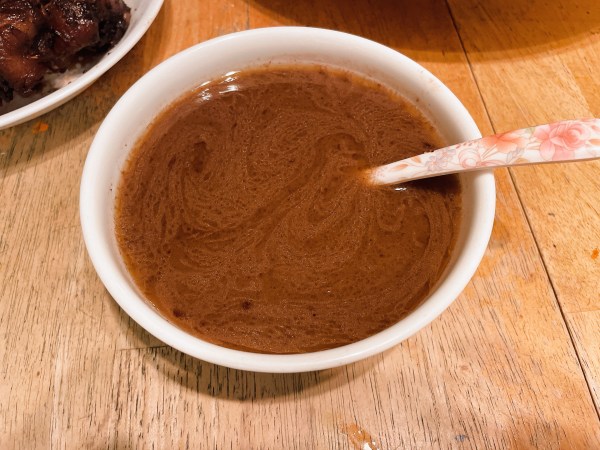
Dude.
This jus is so good. The recipe said to toss out the veggies used for stock but even those were packed with flavor. Just wow. This is probably one of the best gravies I ever had in my life. I could taste hints of the wine but with rich, beefy undertones. Oxtail bones were definitely the way to go in infusing the jus with enough gas to get to Flavortown. You could dip anything in this and it would make it taste amazing.
Anyway, after I finished with the other dishes, I was able to move onto the last step of the roast, the “sear”, which involved putting it under 500-550F for 6-8 minutes. At this point, after getting burned by the recipe with the roasting time, I decided to put it under the broiler for 2 minutes and decided to just call it then. My mom commented that it looked exactly the same but at this time, I really didn’t care.
After letting it rest for another few minutes, my mom helped me slice up pieces of the roast. With some nervousness of what it would look like, I braced myself.
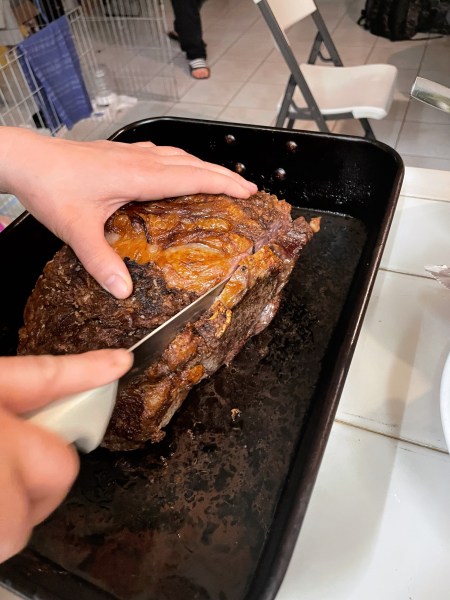
So it appeared that my meat was somewhere along the lines of medium-well-done. The eye of the roast appeared to be more on the medium side but everywhere else seemed to be closer to well-done.
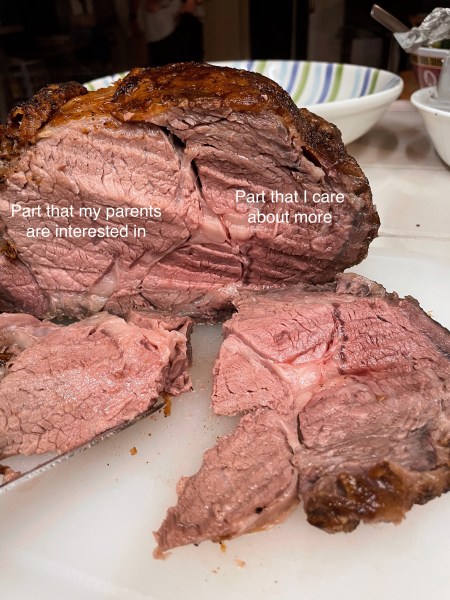
“To you, it’s overcooked. But to me, it’s perfect. Papa and I like our meat well-done,” my mom said as she carved slices off the meat.
My parents’ garbage taste in done-ness of meat aside, the meat tasted pretty good and wasn’t dry or tough at all. I liked the salty fat bits that came with each slice. The meat was definitely not cooked to my preference but I was pleasantly surprised by how good it still ended up being. The jus elevated the meat from good to great anyway. My family definitely enjoyed it more than I did but since this dinner was made with them in mind anyway, maybe it was for the best that it turned out this way.
Mashed Potatoes and Roasted Veggies
These side dishes were relatively straightforward to prepare. For food prep, I decided to peel the potatoes the night before, which I ended up being glad that I did. I need to get faster at peeling potatoes.
I made the mashed potatoes first while the prime rib was roasting. After boiling the potatoes, I realized that I didn’t have anything to mash it with. To this issue, my mom brought out a potato ricer.
I’ve never seen a potato ricer before in my life. It looks like a giant garlic press and it operates as one.

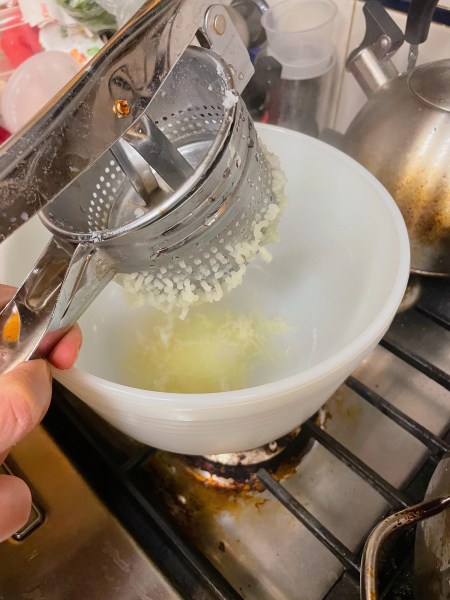
Surprisingly easy to use, with the help of my mom, we made short work of the potatoes and added some milk, butter, salt and pepper until we got the texture and taste we wanted. Mashed potatoes tasted great. It was smooth, buttery, and creamy.
Next.
The roasted veggies came next. While I was waiting for the jus to finish simmering for 20 minutes, I tossed some mushrooms and roughly chopped carrots (which surprisingly were fast to peel) in avocado oil, salt, pepper, and thyme. Roast it at 400F for 20 minutes. It was good. Recipe called to toss the mushrooms in butter but I elected to ignore that step. Mushrooms were juicier than I expected though.
Next.
I upped the temperature to 500F and roasted the broccoli next, tossed in some avocado oil, salt and pepper. Because my mom prefers her broccoli crunchy, I purposely roasted it underdone for closer to 15 minutes, rather than the usual 20 minutes. Broccoli turned out great. I realized I forgot to add shallots and balsamic vinegar. Oh well, tasted great anyway.
Sometimes, simple is more.
Egg Tarts
The day before, I mostly prioritized making the dessert since there were chill periods involved, particularly the puff pastry. My mom had some individual tart molds but they had very deep ridges so I was a little scared that when it baked, the pastry would tear at the ridges. I ended up using quite a bit of dough to compensate for it–so much so that my mom even commented on it when she jumped in to help me mold the dough into the molds. I also ended up rolling out a piece of dough to make one large enough to use as the crust for a 8-in tart pan my mom had.
On the day of, I started with finishing up the egg tarts by making the filling, changing from classic egg tarts to Portuguese ones last minute. This time, I learned from last time and added just a pinch of cinnamon. Because heavy cream seems to be in high demand, I used half-and-half as a substitute instead. Baking them was a bit interesting where I noticed that the tarts were taking much more time to brown, including the giant one, There were also some interesting bubbles on the large tart where the filling was clearly rising like a balloon on top of the tart. This is something that I ended up baking the latter for closer to 30 minutes.
Overall, unfortunately, I think I had much better success with the first time I made Portuguese egg tarts. Because of the different individual tart mold design, I overcompensated on the dough so the crust:filling ratio was quite off, close to 80:20, which my mom was very quick to notice and mention. The taste of the custard was better this time. I think I like this better with a pinch of cinnamon, rather than the 1/2 tsp that the recipe calls for. I just wish I had more room to include more custard.

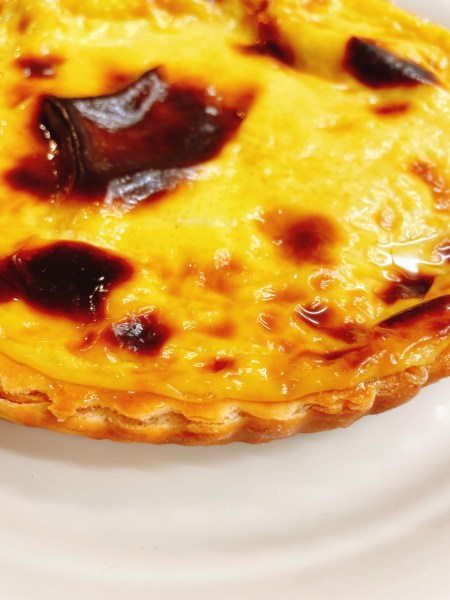
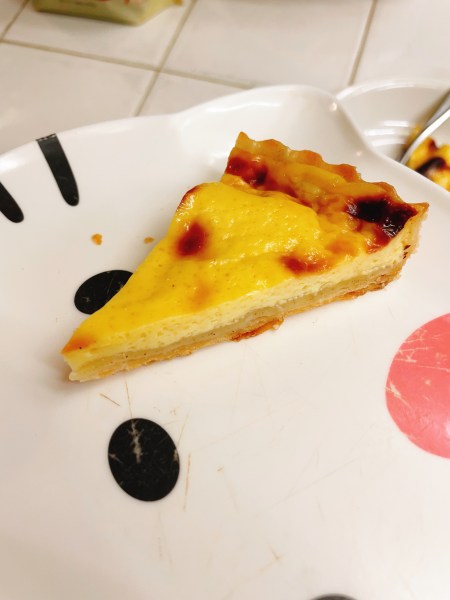
For the case of the 8-inch tart, it looked beautiful. I liked how the caramelization of this tart turned out. Unfortunately, I could not say the same about the taste or the texture. The taste was very eggy, almost scrambled egg-ish, with the texture being pretty similar to an omelette. You could even peel the “filling” off. I didn’t think of how quickly the filling would bake, which would make sense, given how shallow the tart pan was, in comparison to the smaller tarts. As a result, the tart was clearly over-baked. Though edible, it was not the most enjoyable experience and I was left feeling more than a little disappointed with how it turned out.
Overall
So, things did not go according to plan for almost all of the dishes that I’ve made. I was a bit frustrated by that. Similar to last time when I made dinner for family, my mom ended up helping me plate the meal, which is something I know she enjoys doing. It ended up looking pretty nice and colorful.
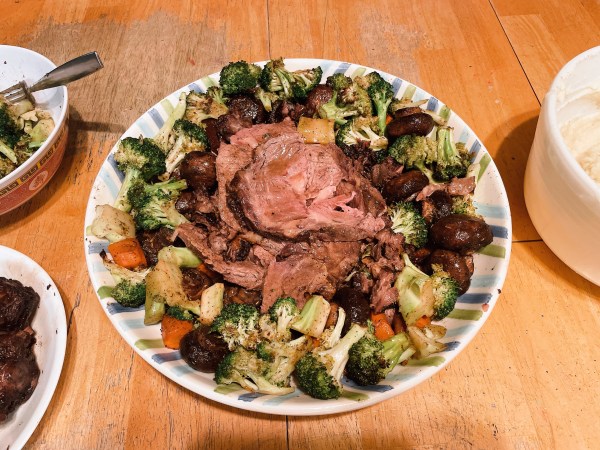
The meal was good. It was a classic, rich Christmas dinner with good meat, mashed potatoes, roasted veggies, and some lightly toasted sliced baguettes to the side. The star and the savior of the show was the red wine jus and the braised oxtail meat that came with it. The meat was so tender and full of flavor; the jus made anything it touched taste so good. That was honestly my favorite part of the meal.
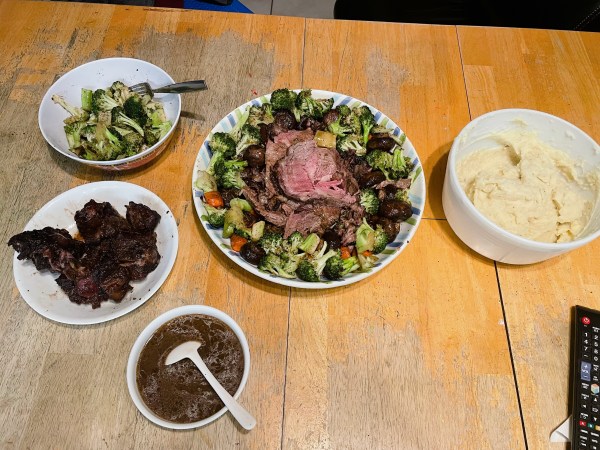
My family enjoyed it too but I couldn’t shake off the feeling of disappointment. I planned pretty hard for this meal. I took it pretty hard that things didn’t turn out the way that I had hoped–from overcooking the meat to the failed egg tarts. I had high expectations for this meal and they were not met. Despite dinner turning out alright in the end, I felt like this meal was a bust.
I know it’s weird to get emotionally frustrated over a botched meal that didn’t turn out to be that botched after all but that’s how I was feeling. As I was journaling the morning after, I felt those feelings rise again and even brought them up with my mom, expressing how I felt about dinner yesterday and asking what she honestly thought about it.
Talking with my mom gave me some right-sized perspective. She said that even if I saw the meal as a failure by my standards, she enjoyed the meal. She said that she was proud of me for taking initiative in making food for the family. It saved her a day from working in the kitchen where she was able to rest. She was also pretty impressed with me trying and pulling off a pretty ambitious dinner by myself. I asked if she thought I was bad at cooking. To which she replied, “No, I wouldn’t asked you about making dessert for us if you were. I’d tell you if you were bad.”
As she talked, I think it also helped remind me of why I made Christmas dinner to begin with. It wasn’t to test and show off how good I was at cooking but it was to be a blessing for my family. I didn’t need to show my family that I was competent. I needed to show them that I wanted to love them this holiday season. Based on my mom’s response, I think I did.
It also was really nice to hear my mom say that she was proud of me too.

 Things Nicole Tried in 2024
Leave a comment