This is a bit of a catchup post but a few weeks ago, I came across something called “dishwasher salmon.” For reasons, I decided to make this my next cooking venture. After waiting for the right timing when the dishwasher wasn’t being used, I finally got the chance to do it.
Why.
¯\_(ツ)_/¯
Anyway, dishwasher salmon was first introduced in the 1970s as a way to cook salmon while cleaning dishes, a novel way to use a dishwasher when the appliance was first introduced to the average American household. With the same spirit of using fancy kitchen utensils or gadgets to elevate one’s food game, the method of cooking a fish in a dishwasher was invented. This article sums up pretty well how this seemingly cursed dish came into existence.
The person who first introduced this dish, Vincent Price, appeared to be a modern Renaissance man–an actor, art collector/historian, and gourmet cook with some interesting political leanings (he had a brief stint as a Nazi then became anti-Nazi and then some). Honestly, reading through his Wikipedia page alone is already much more interesting than this dish if you got 5-10 minutes to burn.
How does it work?
Anyway, this method of cooking claims to make a really moist, poached salmon. Because this method was also so far out of the norm, I don’t even really have a recipe for this dish. Not every dishwasher is the same. Trying to figure out what to do with this recipe required a bit of background reading into dishwashers, various dishwasher salmon recipes, and the cooking temperature for salmon.
Some recipes tell you to cook your salmon on the normal cycle of your dishwasher, which can take you anywhere between 30 min to 1.5 hours, which is a very wide range of time.
The “normal cycle” on my dishwasher was 2 hours and 15 minutes.
The next thing I checked for was the cooking temperature of salmon. 145F is the recommended temperature by the USDA. However, it turns out that there’s a range, not so different from cooking steak.
A shout-out again to J. Kenji Lopez-Alt, he wrote a pretty thorough guide on this topic on SeriousEats. it turns out that there’s a range of temperatures to cooking salmon–from rare to well-done.

It’s interesting to see the progression of salmon being cooked, even seeing the flakiness and white lines form within the meat. Apparently, the white lines and white stuff that appears on top of cooked salmon is something called albumin, a protein that is liquid in raw form but semi-coagulated/white in its cooked form. As the flesh fibers contract while cooking, albumin is pushed out, leading to the appearance of white stuff on fish. This is also a pretty good indicator of being able to tell how cooked one’s fish is. There is more white stuff to be seen on overcooked salmon.
One way to avoid overcooked salmon is by sous-vide, which is basically what this dishwasher is going to (try to) do. Except instead of a vacuum bag of salmon being submerged in a vat of gently circulating temperature-controlled hot water, it’s a fish wrapped in foil being blasted with jets of hot water (circulation?).
Unlike sous-vide, a dishwasher isn’t very precise or controlled when it comes to temperature or even cooking but there are set temperature settings. For the dishwasher I have, it’s a Bosch Silence Plus 50 Dba, which is a fact that none of y’all probably care about to hear but I’m mentioning this because I ended up having to look up the manual for this appliance to figure out the meaning of what these cycles mean.
My first preference was to go for the “Quick Wash”, which was only 30 minutes, but alas, I saw that the wash/rinse temperature was 113F and 122F respectively. Both of these temperatures were below the target minimum cooking temperature of 125F.
Because I figured that it was better to have a late dinner instead of playing chicken with food poisoning, I elected to go with the “Auto Wash” mode, which had a much safer, less dubious rinse and wash temperatures of 130-150F and 156F.
So there you go.
How did it go?
The process is very straightforward. I don’t think this requires a link to a recipe. However, something I did want to note was when I was looking for different recipes, I came across this interesting step in one of them:

You know, because, God forbid, if you don’t have a dishwasher to cook your salmon, worry not, an oven is still a suitable second choice.
12 minutes vs 2 hour cook time.
…
Well, it wouldn’t be dishwasher salmon if I cooked it in an oven.
Anyway, the steps for this were:
- Get a salmon (I used roughly 1.5 lbs of salmon) and place it skin down so that the flesh/meat side is up.
- Liberally cover it with seasonings of your choice. I just used Trader Joe’s everyday seasoning, some kosher salt, and some lemon juice.
- Then wrap it tightly with foil. Double foil it to prevent juices from leaking out.
- Place it in your dishwasher and cook according to the cycle.
- Spend the next ten minutes convincing your housemates that they (probably) won’t get food poisoning from it.
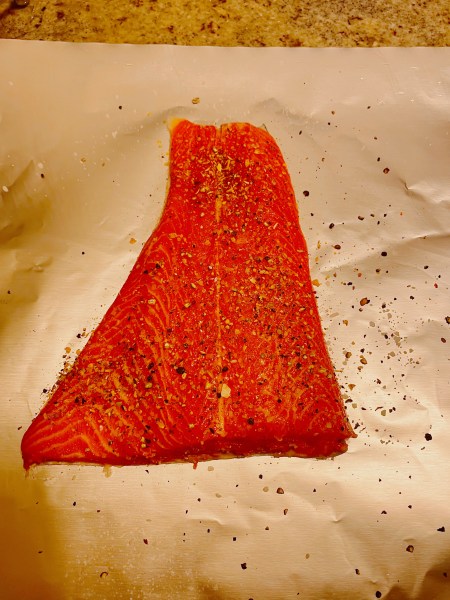
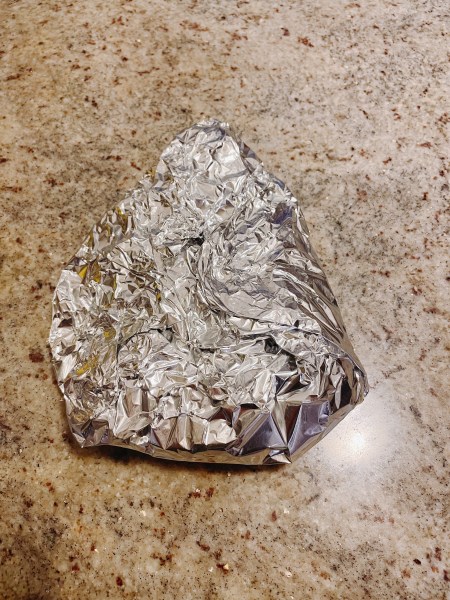
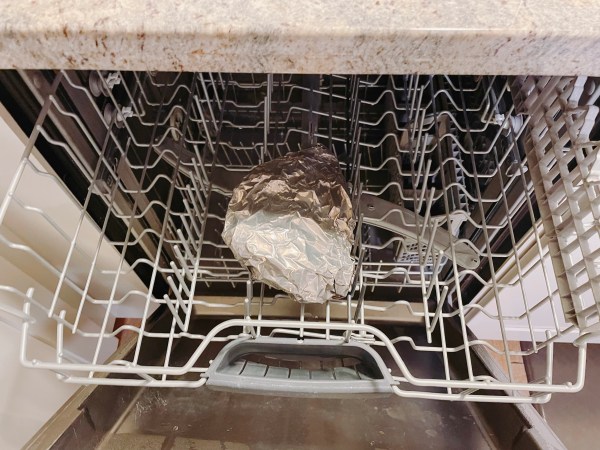
Yeah, this was actually pretty straightforward. I took extra care not to put in any dirty dishes, in case if this didn’t work. Honestly, this part doesn’t even make any sense to me. Because I would most likely load a dishwasher with dirty dishes after I cooked and ate. The convenience hook of this method is dumb. I almost wished that I included other things to be cooked in the dishwasher. Maybe some vegetables or something.
Behold, after two hours, it was complete. I was half expecting for it to smell like fish in the dishwasher but miraculously, it didn’t leak while cooking and everything stayed inside the foil. And it didn’t taste awful. Tasted pretty good. It was moist, not chalky like some overcooked salmon I have had. And the meat was flaky, meaning that it was cooked. The housemates who were brave enough to try it also thought it tasted like salmon.
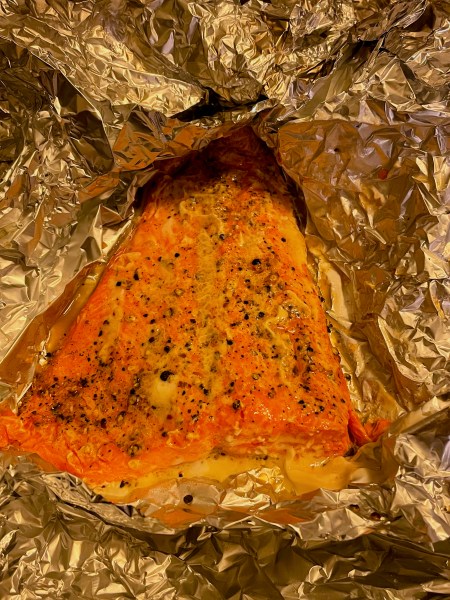
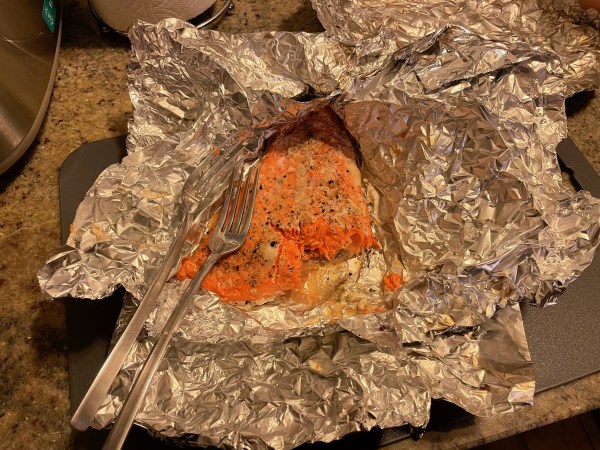
There was nothing really magical about this dish, other than the novelty of sticking it in the aforementioned dishwasher. Considering how long it took to cook this dish and probably the amount of water this wasted, I don’t think I’ll be repeating this dish anytime soon.
I’ll stick with the oven for salmon cooking purposes.
Bonus: Nastar Gulung and Poached Chicken
In other news, for Lunar New Year, I ended up celebrating with my house by making dumplings as well as revisiting kue nastar again and making a Cantonese poached chicken dish.
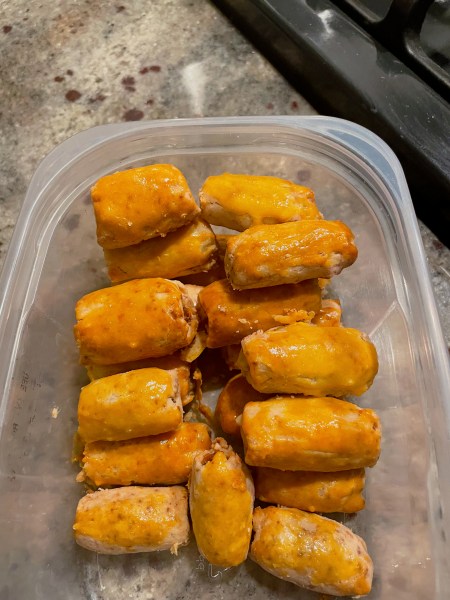
Instead of kue nastar, I made nastar gulung, which translates to “rolled pineapple tart.” I used a combination of this recipe and this recipe (for the pineapple filling). This, to the surprise of no one, took a while to make. I learned from last time and didn’t buy a pineapple. I used two cans of crushed pineapple and cooked it into jam. It was a bit of a hassle to roll out this dough (which was more crumbly than I expected). This ended up being a really tedious version of pigs in a blanket, except instead of hot dogs, it was pineapple jam. I ended up deviating from the recipe and making individual roll cookies.
It took me about two hours to make around 40 cookies.
And it was worth it. I’d do it again. These taste so good.
The other dish was this Cantonese poached chicken dish, recipe taken from Woks of Life. The one noteworthy thing about this was that this was my first time handling a whole chicken. I used a cleaver to hack a chicken into pieces and I felt powerful.
I split a cutting board in half with the cleaving of this chicken.
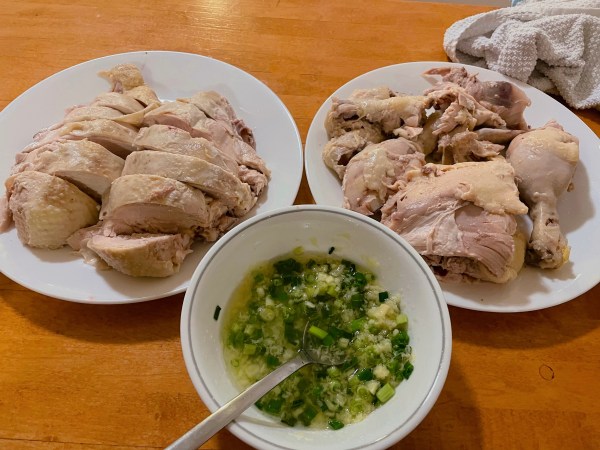
This dish was very light, not too heavy, and the broth created made for a nice cleanser from the richer foods we ate and a good fishball soup later on in the week.
5 stars, would make this again.

 Things Nicole Tried in 2024
Leave a comment