I was on a family trip to Indonesia during the month of November, the first time I’ve been back in seven years. I don’t think I was left with a strong impression of the country the last time I visited, other than some vivid memories of food poisoning and how warm the climate was.
This time, it was a little different. It was definitely as warm as I remembered. Yet, I found myself marveling at this country–from its chaotic streets to its busy shops/malls to its “extra”-ness of its people/culture to its amazingly flavorful food. It was like actually paying attention to a place for once and seeing it with fresh eyes. I was struck with a new sense of fondness and home that I have not previously felt before on my past trips.
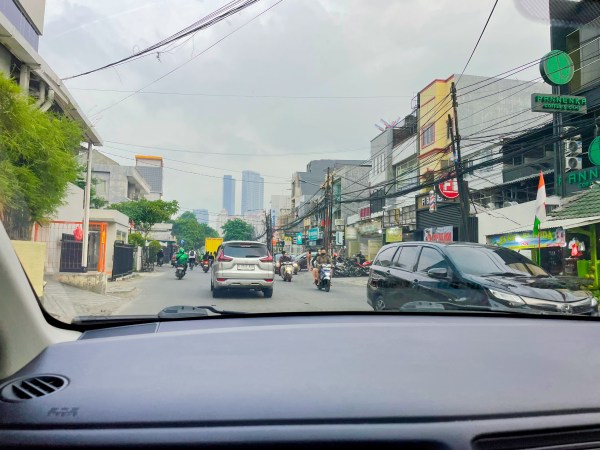
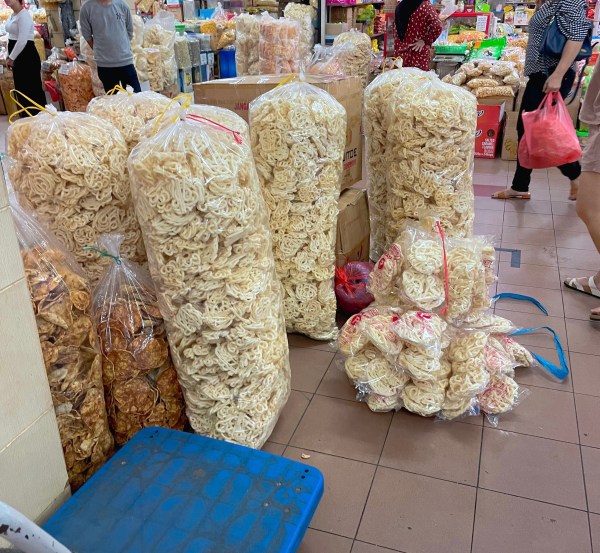
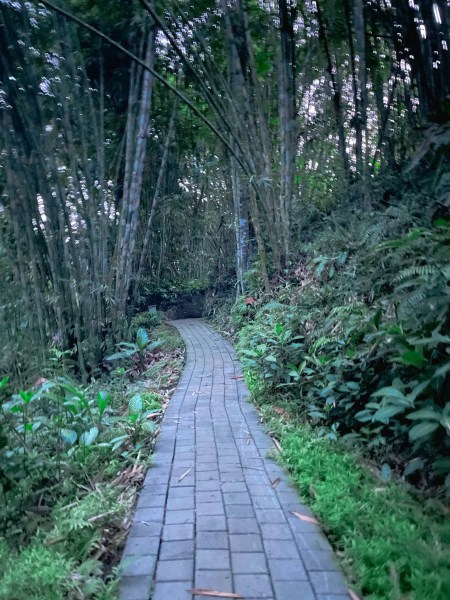
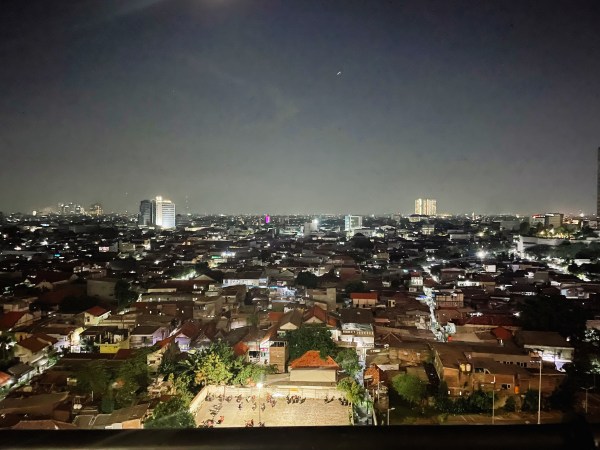
I have many thoughts about Indo but I can sum it all in the conclusion that my trip was too short and I need to go back. I’m thankful for what God has allowed me to see and experience during my time there. I can definitely say that He has answered some prayers for me there.
Even as I write this, I feel a sense of affection for that country.
When I get hit with that feeling, I just want to eat some Indo food. A contrast to Indo, NorCal was in the nice fifties for temperature.
My first thought upon returning was: “Why is it so cold?”
My second thought was: “My cousins might perish here.”
Then, my third thought was, thinking about my friends in the Midwest/East Coast: “Oh, my cousins would surely die there.”
Anyway, my point is: it was a cold winter night and thus it was soup weather. It was a good day to make some soto ayam. I had this soup aggressively fed to me by an aunt in Indo and it was excellent. I also grew up consuming this soup with rice, as this soup was a part of my mom’s regular, perpetual dinner soup rotation.
I don’t have a recipe for this because I cheated and used these magical things called “bumbu packets,” which are these packaged seasoning pastes for many different Indo dishes when you’re too lazy to make it from scratch.
Looks like this:
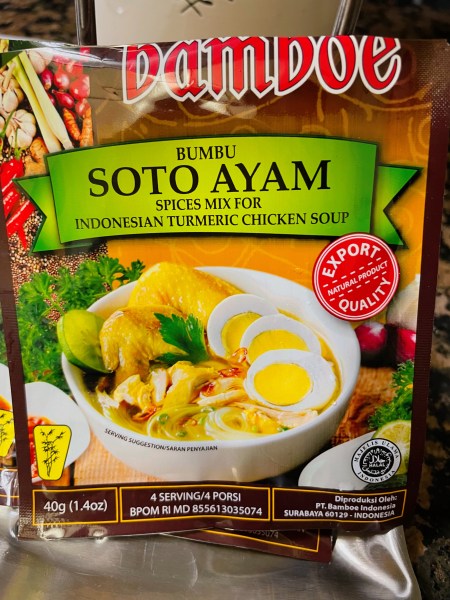
And I brought a bunch back from me because realistically, the time it would take for me to hunt down all of these ingredients and prepare them properly is time I do not have.
This is how my mom, a busy person, supplied our family with Indo food when she had the means. I grew up eating a lot of soto ayam, created with the help of these magical packets.
If I want a quick fix for Indo food, bumbu packets is the way to go.
Random tangent: wait, what’s bumbu?
To the people who did not ask, bumbu is the Indonesian word for “spice paste.” Here is an unsolicited list of some of the articles that I found on the subject:
Usually made with a mortar and pestle, the spice paste, or bumbu-bumbu, is a common foundation found in many Indo dishes. There are many different types of bumbu, depending on what dish you make. With the very numerous ingredients, many of them a bit harder to find than just at your typical 99 Ranch, and the extra step of grinding them into its proper paste form, it can be a bit labor intensive.
With the complex profiles of a lot of these dishes and Indo’s own rich history of being home to a lot of spices/herbs, both native and those introduced by many diverse groups of traders, I like to think that the foundation of its cuisine requiring so many different ingredients is a personally targeted flex on other countries to step up their cuisine’s game.
It is extra and annoying but I appreciate the attitude.
There are also some practical aspects to this that the shelf life of these pastes (especially due to the anti-microbial properties of ingredients like garlic or shallots) is unreal. Before the time of fridges, spices were the way of preserving food.
There are many different types of bumbu but there seems to be a few basic types of bumbu-bumbu that make foundation of a good portion of Indo cuisine, which are:
- Bumbu dasar putih (basic white spice paste). This non-spicy paste usually contains garlic, shallot, galangal, candlenuts, and at times, coriander. Usually included in dishes like opor ayam or sayur lodeh.
- Bumbu dasar merah (basic red spice paste). This is the spicy one because it got the chilies. In addition to red chilies, it also contains garlic, shallots, maybe tomato, belacan (ayyy let’s goo), maybe some coriander, coconut sugar, and candlenuts. Usually included in absolute f i r e dishes like nasi goreng or rendang.
- Bumbu dasar kuning (basic yellow spice paste). This one gets its color from the tumeric and gives the Indonesian yellow dishes its signature color, like soto ayam.
It’s a bit time-consuming to make any of these types of bumbu-bumbu but if one were to make a lot in advance and have them at hand ready to go…it would be a game-changer.
Using the power of money with the backing of the commericialism in Indo food and packaging industry, I elected to not make my own and instead, use a packet of ready-made version of bumbu kuning to make soto ayam.
So…if you’re looking for my account of making authentic Indo food from scratch…you’re not going to find that here.
Making It
Since I was using the seasoning packets (two to make one large batch), this was real easy to make. It just required a bit of time.
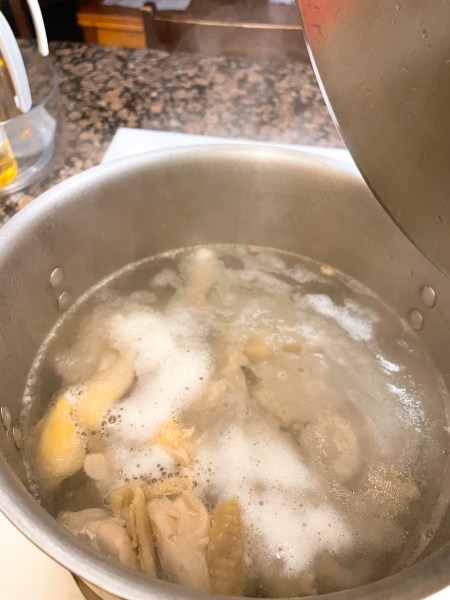
I first cut up about ~2 lbs of chicken thigh meat (bone-in, skin attached) and blanched it in boiling water for 2-3 min to get rid of the scum before draining the water and replacing it with a fresh new pot of boiling water, leaving it to simmer for the next 1.5 hours.
In the meantime, I stir-fried the paste for some extra flavor (dunno if this was actually necessary but that seems to be a thing to do with pastes).

It doesn’t look great but it smelled great. I belatedly realized a little late that I should’ve opened the windows when I smelled the spices in the air. Good time my roommates weren’t home.
They would probably cough and choke.
In terms of other cooking prep, I also cubed up 2 potatoes and thinly sliced up some cabbage and green onions before cutting up a lime. Following what I learned when making shio ramen, I blanched the cabbage for a few minutes and some bean sprouts for ~1 min to soften and remove the bitter taste.
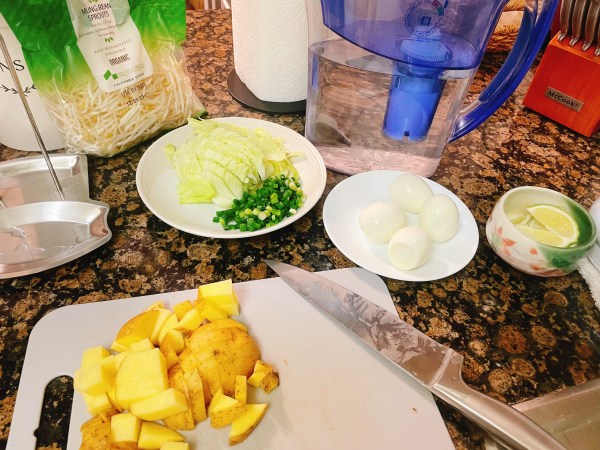
I also made some hard boiled eggs–12 minutes on medium heat and cut it in half in the same way I would when making ramen eggs.
Random fun fact, I used to hate egg yolks so my mom would fish out the egg whites for me to eat.
Around the hour mark of simmering, I added the cubed potatoes, along with the spice paste to the broth and saw the color instantly change to that familiar yellow color.
Oh, it smelled so nostalgic too. I could feel my excitement mounting as I made it.
In the last five minutes of simmering, I added the halved eggs and gave it a good stir before sprinkling in the green onions.
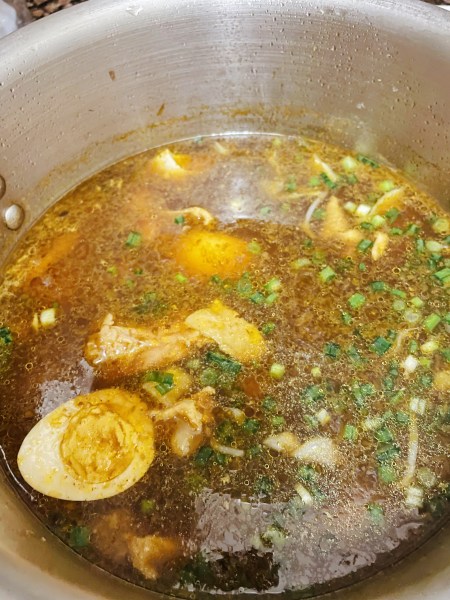
I was supposed to take out the chicken pieces and shred them but I was too lazy to do so and elected to keep them in chunks.
So, what makes soto ayam is also what you eat with it too. For my soto ayam, I had the following as toppings:
- Beansprouts
- Lime
- Cabbage
- Green onions
- Fried shallots
- Sambal
These are some toppings one can have but it seems to have vary. You can add other greens or even vermicelli noodles. The one thing that I was very sad to not have readily on hand was—kerupuk udang (shrimp crackers). Those crackers elevate any Indo soup from good to great.
One saving grace was that I had this bag of fried shallots, helpfully provided to me by another aggressively loving aunt. Apparently, making fried shallots is a labor of love. It takes time to make them.
My mom tells me, “This is valuable. Expensive.”
So I dumped a bunch of it in my soup and ate it a good bunch of it like a barbarian. Probably my aunt would approve.
Overall
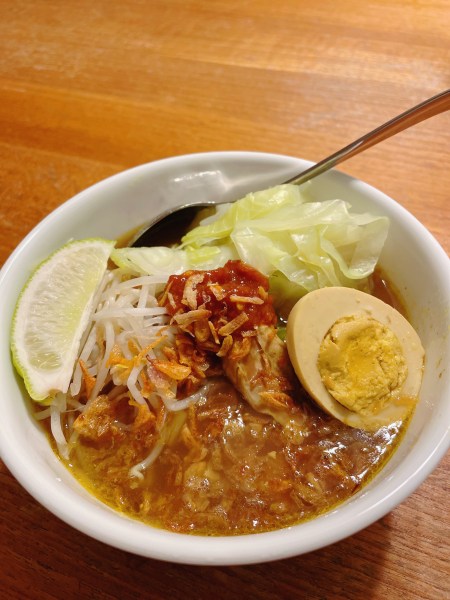
Anyway, this soup ended up being a comfort food and sustained me for the next couple of days as a complete meal when I ate it with rice. I don’t think I needed to add potatoes to this, in hindsight.
The flavor of this soup was very comforting. It had a light, not overwhelming taste with the chicken base with fragrant notes from the turmeric. I like that it didn’t feel overwhelmingly rich. The soup also had a slightly sour/tangy due to the lime (I would add two limes) and the sambal added a bit of heat to it. The presence of the fried shallots gave it a nice savory-sweet umami punch that I liked.
This is a nice winter soup to make and an even nicer way to regard my country with some more fondness.
One day, I’d like to return to Indo.

 Things Nicole Tried in 2024
Leave a comment