It has been awhile since I last made a dessert. To break the funk, I decided to make triple oatmeal cookies, using Stella Parks’ recipe from her book, BraveTart. However, I’m pretty sure if you google “bravetart triple oatmeal cookies”, there will be the recipe floating around somewhere.
Oatmeal raisin cookies are one of those cookies that you don’t hear many people singing praises, like you might hear about for chocolate chip or snickerdoodle cookies. I’ve heard of people who hate raisins and thus hate oatmeal raisin cookies by association. I’ve also heard of people who say that it’s good but between that and a chocolate chip cookie, the chocolate chip cookie is gonna get picked first. From my experience, I do like oatmeal raisin cookies but I just don’t see it pop up in my life very often.
So I decided to be the answer to my own cravings and make them myself. I was also inspired by the sheer surplus of rolled oats and cranberries from DT breakfast found in my kitchen pantry.
Where does the name, “Triple Oatmeal” come from?
It comes from the fact that there are three sources of oatmeal in this cookie: oat flour, rolled oats, and steel-cut oats. Up until I made these cookies, I had no idea that there were two different types of oats.

- Steel-cut oats: this is the oatmeal you would find for your Irish oatmeal, looks like little pellets, coarser and chewier texture, longer to prepare
- Rolled oats: this is what you would typically find in your oatmeal recipe, these are oat groats that were steamed and flattened/”rolled over”, milder and softer texture, much easier to prepare than steel-cut oats
BraveTart also offers a pretty interesting section about the history of oatmeal cookies, starting with how oatmeal, first steel-cut, then rolled oats, first came to be, and how oatmeal raisin cookies first rose to prominence. These cookies became especially popular during WWI, the Great Depression, and WWII during the times when sugar/flour were otherwise pretty scarce.
Triple Oatmeal Cookies
So this recipe was a little different where there are steel-cut oats involved, as well as including cranberries (not raisins) and pecans. I also didn’t have any oat flour and used whole-wheat flour instead. Following this recipe was relatively straight-forward. I left a stick of butter near the oven while it was preheating to make it soften faster. I lightly toasted some pecans (with a few walnuts) for 4 min at 350F and mixed it with the oats, flour, and cranberries. In a separate bowl, I mixed the two sugars, cinnamon, baking soda, vanilla, butter, and salt. After beating the wet ingredients together and then folding in the dry ingredients, I was left with a pretty chunky and stiff dough.

Since I halved the recipe, I was able to make ~16 cookies, and made them in 3 batches (6, 6, then 4 cookies). I used a 1 tbsp measure and scooped out 16 balls onto the parchment paper and flatten them to discs.
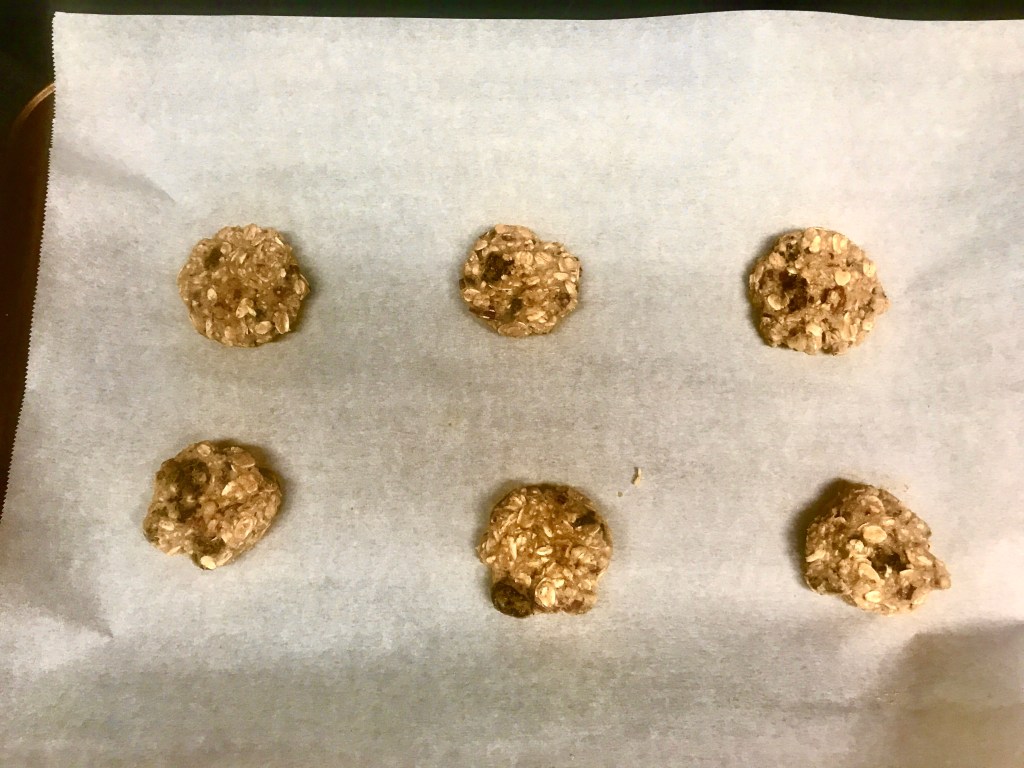
Because I had three batches, I decided to bake them in three different ways:
- Bake it at 350F for 10 min
- Bake it at 340F for 9 min, then 350F for 3 min
- Don’t flatten dough discs and bake at 350F for 10 min
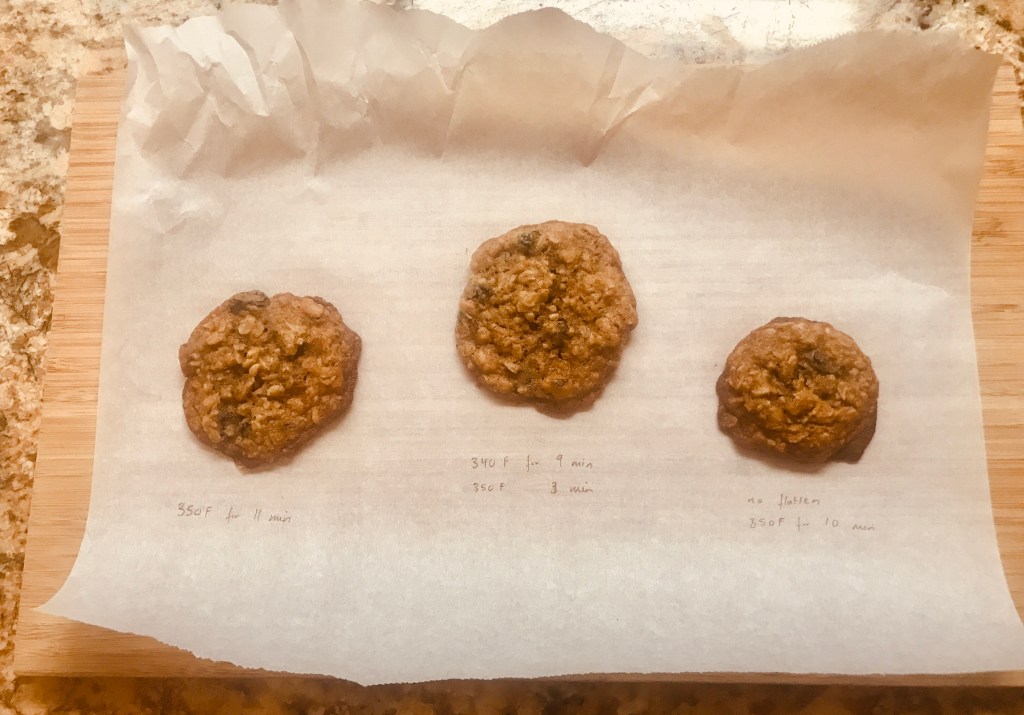
There were some key differences in the appearances I noticed. For the first way, I did notice that the cookies’ edges browned faster while the tops remained steamy and pale. For the second way, these cookies took longer to bake but the browning differential between edges to centers was a lot less steep and more gradual. I think this cookie baked more evenly. The last way was by far the worst of both worlds and highlighted why it was important to flatten the cookie dough mounds. Without the initial flattening, the cookie wasn’t able to spread as much and actually browned much faster (less surface area in contact with the tray, I guess) where the edges were a tad under being burnt while the tops were pale and barely baked. These cookies spread less and baked more unevenly.
One thing I also noticed was that though the recipe said to let the cookies cool down for 5 minutes, I found it more favorable to let the cookies cool down to lukewarm temperatures after closer to 20-30 minutes. When the cookie is even a little bit warm, the cookie was fragile and fell apart in my hands, making me initially think that the cookie was underbaked or didn’t have enough egg/binding protein for structure. However, after waiting longer, the cookies stiffen and took a more solid structure.

Overall, I really liked the taste and texture of these cookies. The butterscotchy taste from the sugars meshed well with the hearty taste of oats, the tangy taste of craisins, and some cinnamon overtones. I especially liked the texture, which was both chewy and crunchy from the oats and the toasted pecans. The ratio of all of these ingredients were just right. These cookies were way more successful than my chocolate chip cookie attempts. I will definitely be making these cookies again.
Oatmeal raisin cookies need more love. They’re really good.

 Things Nicole Tried in 2024
Leave a reply to Mom’s Tofu Skin Soup and the Year in Review – Things I Tried in 2022 Cancel reply