In the midst of the busyness of the school semester starting and life in general, I’m glad that I finally got to do something that has been on my bucket list for awhile, which was making “ratatouille.” Yes, that Disney dish. One, because it’s pretty and it’s from Disney and two, because it gave me and excuse to get some practice with using a cast iron skillet. I used this recipe from Tasty.
I don’t have that much experience using cast iron skillets so I was excited to not only make something from Disney but also to get some practice on how to wield this cooking tool. Before I made it, I was curious about what ratatouille is, rodent-based namesake aside.
What is ratatouille?
Ratatouille is a French Provençal summer vegetable stew with herbs that originated from Nice. It usually contains summer vegetables, such as eggplants, squash, zucchini, bellpeppers–things are in season during mid-August. Known to be a versatile dish because it could be used with any vegetable scraps, it became known as a “peasant dish”. It always involves the same process of cooking vegetables with herbs (usually basil or thyme) into a mushy stew that could be eaten at any temperature, usually with a starch of some sort. It doesn’t even have to look like artfully arranged in a series of veggie slices like what was shown in the movie.
Also, so it turns out the titular dish from Ratatouille is not actually ratatouille. It’s actually a verrrrry similar dish called Provençal tian that Thomas Keller, Pixar consultant for the film and chef at The French Laundry, adapted in the style of confit byaldi. Both ratatouille and tian are stews and uses the same ingredients, but are prepared a bit differently.
So to break it down:
- Ratatouille: it looks like a stew
- Tian: it looks like the thing from Ratatouille, the elegant/nicer looking version
I thought that this article from SeriousEats did a pretty quick and helpful breakdown of this.
Making the “Ratatouille”/Tian
This dish took roughly ~2 hours to make, half of that time was spent on prep work.
There is so much prep.
Because I did not have a Japanese slicer/mandolin, I sliced every vegetable into as even slices as I can. I never sliced so much in my life. I was very thankful that I read through the reviews on the recipe, which warned me to half the amount of veggies required in the ingredient list. I would have otherwise spent even more time slicing veggies. (spoiler alert: I still had so much excess veggies at the end of this)
Anyway, after dicing/mincing/chiffoning the bell peppers/onions/garlic/basil, I moved onto sautéing this mixture until translucent/brown on the cast iron skillet before adding 1.5 cans of tomato sauce (instead of crushed tomatoes), which was very reminiscent of the time I made menemen or shakshuka. I was afraid that I didn’t add enough sauce, though in hindsight, it turned out that it was more than enough and made it waaaay more saucy than it needed to be.

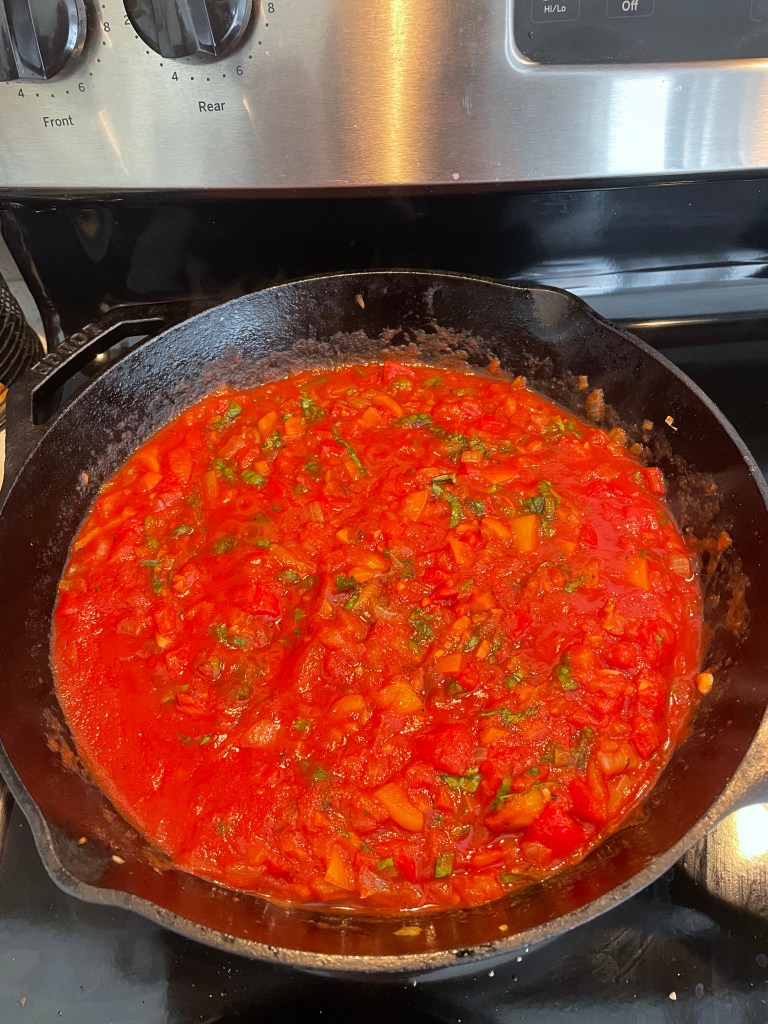
After mixing in the basil, I got to layering the four veggies in the iconic pattern on top of the tomato sauce mixture–eggplant, zucchini, tomato, then squash. I wasn’t too sure how it was going to turn out, especially given the…varying sizes of veggies, ranging from very big to very small. But in the end, it turned out alright, so long as I tucked in the veggies as tightly against each other as I can.
One thing that I also realized was that I should’ve gotten a Chinese eggplant, instead of the American eggplant, which was F A T. No seriously, it was so thick and fat compared to the other veggies, I ended up cutting the eggplant slices in quarters just to get it to a comparable size to the rest of the other veggies.
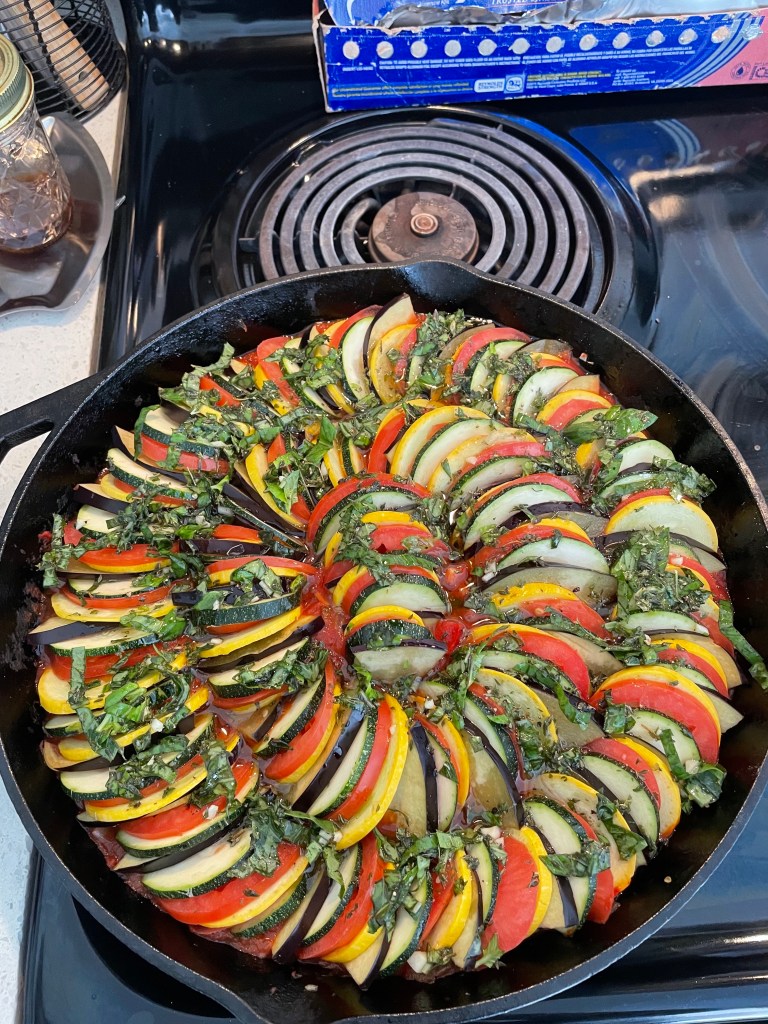
Then, after slathering the dish with the basil garlic dressing, there was the baking process. After baking it at 390F for 40 min (covered) then 20 min (uncovered), I was nervous since it definitely became very apparent to me now that I added waaaaay too much sauce to the point where the dish resembled a soup more than a stew. I realized that I did not account for the water that would be released by the veggies during the cooking process.
The obvious solution would probably be to continue the baking process to reduce the sauce and pray that the veggies won’t overcook in the process. Unfortunately, I was on a time crunch and had to leave for MBS. As much as I was worried about it and wanted to see what I can do to fix it, I did not have anymore time.
Thus, in an act of submission to the Lord, I turned off the oven and left the still bubbling dish in there to keep warm before heading out for bible study.
My soupy tian was in God’s hands now.
When I came back to pick up my dish for the potluck, I prepared myself to do some last minute draining of extra soupy sauce. However, I was pleasantly surprised to see that the extra tomato sauce had managed to successfully cook off during the 2.5hr timespan I was out. Leaving it in warm oven gave the tian more time to cook and made it look more like what I was looking for.

Oh, it tasted quite good. It wasn’t too soupy at all and more of the thick stew consistency that I was looking for. I think this dish would have went really well with toasted bread or pasta. I didn’t get intense happy core memory flashbacks like the food critic in the movie but I was pretty satisfied by how it turned out. Appearance-wise, this was probably one of my more better looking things. It actually had a depth of flavor beyond just its tomato base. I could taste the other veggies and basil, which I was very happy with.

Though I don’t know if I would spend this much time slicing and putting it together in the pretty display like this, I wouldn’t mind making a simplified version of this stew as a comfort food.
No rat chefs needed.


 Things Nicole Tried in 2024
Leave a comment