About a few weeks ago, I got hit with the craving to make the Indonesian beef dry curry, rendang. As with Indo cuisine in general, this dish falls in the category of Flavortown because it is so good.
This is one of my favorite Indo dishes and another dish that I grew up eating as well.
Following up on my NY resolution to make more Indo food this year, I made good on that craving by making it with my mom who guided me through the process over FaceTime.
Side Note: The Curious (and Unfortunately Ongoing) Case of Freddy-Pancho-Panchito
Little did I know that this rendang would likely be the last dish I would cook in the next few weeks because there is a rat currently dwelling in my home. To bring up to speed those who aren’t aware, a rat was sighted in my house by my roommates. They only saw this rat twice in person but saw the evidence it left behind on the days where we didn’t see it. Evidence that includes:
- A partially eaten Taro swirl cake, rice crackers, and a pineapple cake (all of these were wrapped but he seemed to have eaten through the wrapping)
- Droppings in the bathroom (the bright side is that he has some bathroom manners)
- Chewed pieces of Ikea Kallax cloth bin linings
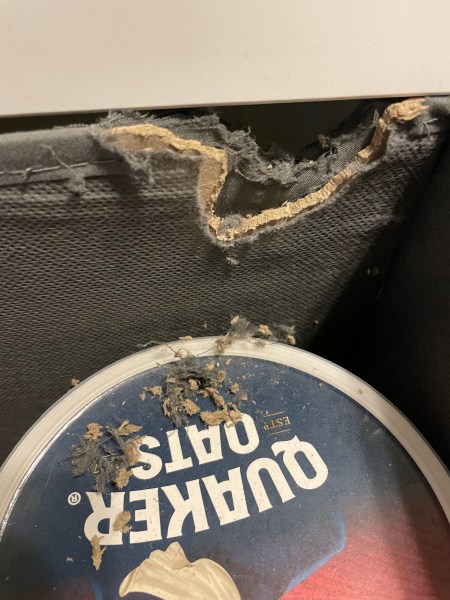
It seems to have developed a taste for cloth and Asian snacks. Don’t worry we’ve also cleared out all of our snack stashes at this point.
Somehow, I missed both sightings when it decided to reappear when both of my roommates were home. Both times I was out, helping out my friends in our international student ministry group with some sort of errand or event–once for food shopping and another for registration manpower for their Spring Welcome event.
So, while my roommates were being terrorized by a rat at home, I was out doing something a little bit more substantial like supporting my friends engaging in spiritual warfare for the souls of international students.
Not sure what the takeaway is there but I would almost argue that it’s an application lesson somewhere.
Or, at the very least, an argument of why one should join international ministry.
You know, to avoid rats.
Luckily, a friend who responded to my roommates’ SOS call on the second sighting came over and had the foresight to take a video recording of the rat before it inevitably escaped.
This rat, given the length of his tenure, was deemed a temporary housemate and given many names, ranging from:
- Panchito (dubbed by my friend, V)
- Freddy, as in Freddy Krueger (dubbed by a roommate who has been personally victimized and has never known a day of peace since its arrival)
- Pancho (dubbed by a roommate who could not remember Panchito)
Fun fact: Tikus is “rat” in Indo.
So, as of writing this post, Panchito (dubbed by V and my preferred name) is still alive and well and living his best life underneath our dishwasher. Traps are set and we lie in wait. I haven’t cooked anything in our kitchen since.
Anyway, so I made rendang before this all went down.
Rendang and its culturally ambiguous origins
As I mentioned earlier, rendang is an Indonesian dry beef curry braised and slow-cooked in coconut milk and other spices. Going on my usual tangential rabbit hole searches, I stumbled upon this article and this article. One of these is a paper that told me way more than what I needed to know for rendang in my life.
Rendang is derived from the Indonesian word, merandang or randang, which means “slowly.” And slowly does it cook–this curry takes a few hours to make due its slow simmering cooking process. Popularized by the Minangkabau people, this dish became known in Indonesia (it’s one of our national dishes!) and Malaysia, with some disputes regarding who “owns this dish.” There even seems greater questions of where the Minangkabau people, who were known to be of the traveling sort, came to invent this dish.
Looking a bit into the history, the Minangkabau people, following their dominant religion of Islam, were not that enthusiastic about eating meat but something was believed to have shifted as they were introduced to new food cooking and preservation techniques with spices, namely from the Portuguese and Indians. Though not totally confirmed, both of these ethnic groups have cuisine ties that may have influenced the Minangkabau folks.
Spices are a natural preservative. For the sake of food preservation, slow cooking the meat in spices extended the life of the food. During a time where refrigeration was not necessarily available and storing food in a feasible way, especially during traveling, rendang quickly rose to be a dependable, durable food, and even more beloved food.
Malaysia or Indonesia (though I guess I already know what my personal bias is), not going to get into the potential politics of it, it is still another great win and excuse for some Southeast Asian pride.
Making It
Yeah, so I don’t have an official recipe for this because I didn’t make this from scratch. As with the soto ayam, I used one of these spice packets because this saved me the headache of having to hunt down each of these ingredients myself. Part of the whole deal with working smarter, not harder business.
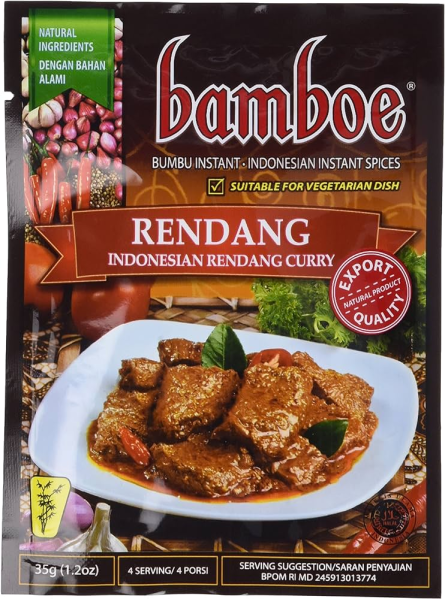
It was through the help of packets like this that made a would-be-painful dish to make a regular part of my mom’s dinner rotation. Additionally, my mom had added a few twists of her own.
When my mom makes rendang, she adds a few extra things, additional to the packets, which include:
(With the consideration of two spice packets being used in mind)
- 2-2.5 lbs of beef chuck roast or stew meat or a mixture of both (I used half of each, just to see the difference between the two)
- 2 large shallots (roughly chopped)
- 6-8 cloves of garlic
- 1 tbsp of vegetable oil
- 3 chili peppers
- 6 kaffir leaves
- 8 oz of Chaokoh Coconut Milk (my mom apparently swears by this brand)
The first step was to blanch the meat then simmer the meat with just enough water to cover for about ~40 minutes.
In the meantime, I added everything else (sans the leaves and coconut milk), along with the spice packets, into a food processor and blend it down into an enhanced spice paste.
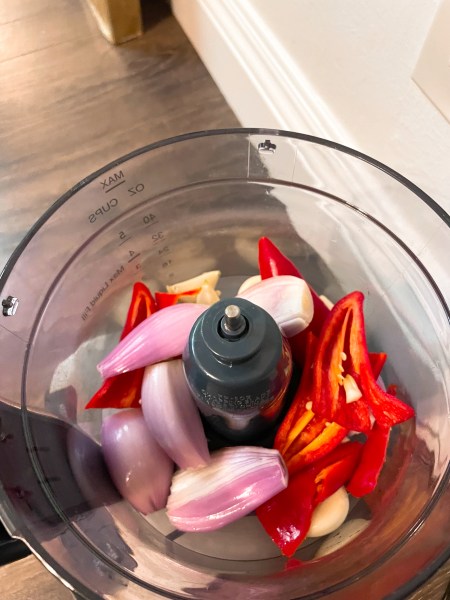
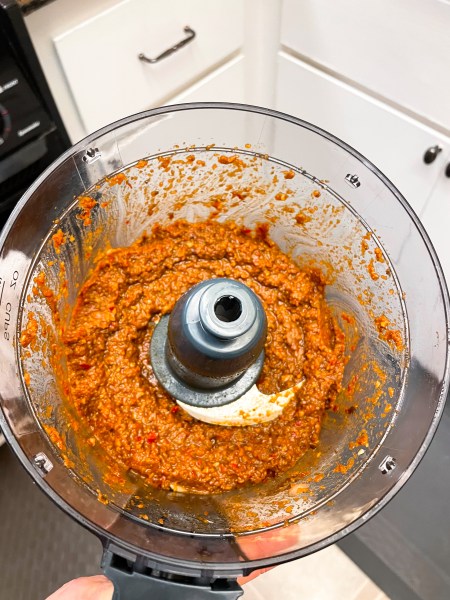
I fried this paste in a wok along with some frozen kaffir leaves until fragrant or about 5-7 minutes on medium heat. Then, I added the simmered meat and about half of the beef broth before letting it simmer for another additional 40 minutes.
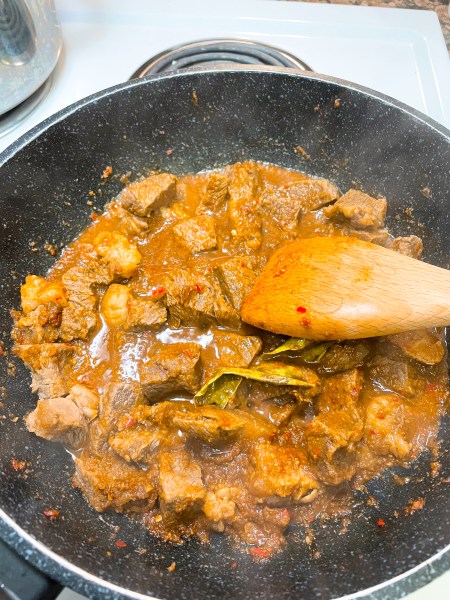
I then added 8 oz or half of a can of coconut milk and let it additionally simmer for another 20-25 minutes until the liquid almost evaporated and the oil started to show signs of separation. I also started getting impatient after adding the coconut milk and started eating it as a bastardized wet version before the 20-25 minute simmer period was up but that’s an aside.
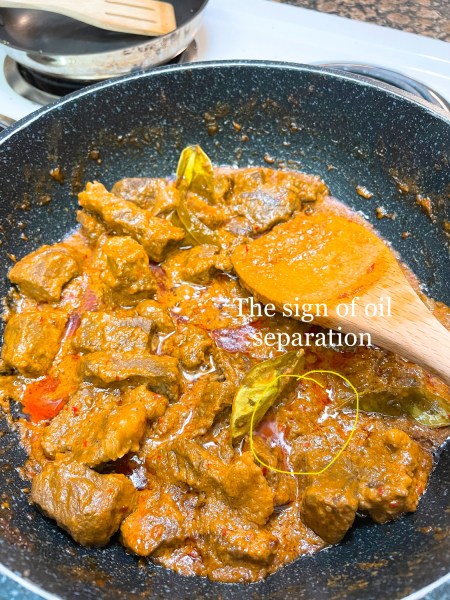
It’s a patient dish (~2 hours) but it’s worth the wait, I promise.
Overall
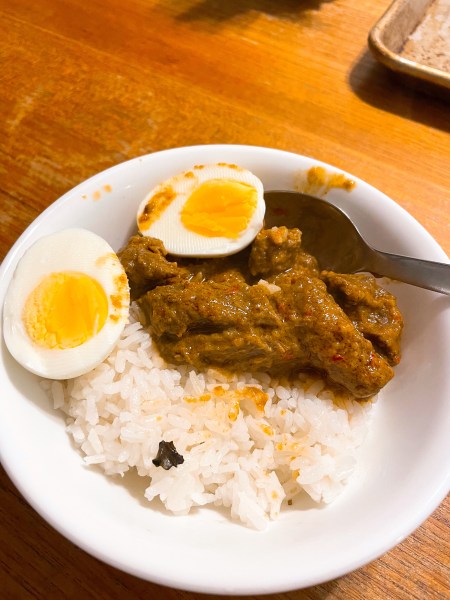
Like I said, I haven’t had any misses when it comes to Indo food and this dish isn’t an exception. I really like rendang and it holds a lot of childhood nostalgia for me. I ate this with rice and boiled eggs! I got ahead of myself and sliced the eggs before adding it to the curry, to which my mom stopped me and told me not to slice the eggs since it would actually fall apart in the curry. So, I just added it to the side.
Taste-wise, it was definitely solid and there’s probably a flavor boost contributed by the additional ingredients on top of even the original spice paste packet. The aromatics of the kaffir lime leaves added a nice sour taste and a little bit more depth amongst the spice paste that I really appreciated. The cool thing about this dish is that it noticeably tastes better the longer you let it sit. I partitioned this to be my lunch to take to work and it tasted better with each day.
One day, I even ate this with mung bean thread noodles when I ran out of rice and that tasted amazing too.
I did notice a difference between the tenderness of the stew meat and the chuck roast meat. Beef stew meat is noticeably leaner than chuck roast meat and it was chewier, even after close to 2 hours of simmering. The chuck roast meat, which contained more fat, was much tenderer. My mom noted that the classic way of preparing this dish was to use chewier meat but she herself preferred tender meat and used beef chuck roast instead. I agree with her and would probably use chuck roast moving forward too.
I enjoy FaceTime-ing my mom and learning from her as she walked me through the things that she would make. It also helped me appreciate even in the ways that my mom works in the kitchen where she took something and elevated it in a way that didn’t require for her to make things from scratch. As I’m starting to educate myself more on what it takes to make Indonesian food and see more and more how it’s not the most accessible food to make or find, I realize I took a lot of the Indonesian food my mom made for granted. It makes me appreciate my mom’s resourcefulness to somehow still make it available to me and the rest of our family to enjoy as I was growing up.
Language Check-In
Still having at it with Duolingo, currently on Unit 9. Not sure how effective it is in my grasp at grammar but it has been upping up my vocabulary though.
Karena saya suka rendang, saya mau membuat rendang. Rendang makanan Indo yang punya daging sapi. Enak sekali!
Apakah nahu saya betul? Saya tidak tahu. Masih belajar.

 Things Nicole Tried in 2024
Leave a comment