It’s almost the end of this month and it already feels quite like the whirlwind. This past weekend, we just wrapped up the second weekend at our youth retreat at JP. I attended the first a week ago with the middle-schoolers and helped put on a science workshop, where we made DIY invisible ink with laundry detergent and learned about what goes into making a paper airplane. Not as popular as the other concurrent workshop, which was boba-making (hard to compete with that), but it was a cozy workshop.
I actually met a student who said she liked chemistry! Which is really refreshing, considering the most common answer I get after I mention studying chemistry in college is, “Oh man, I hated chemistry.” She was very sweet and I’m glad that she enjoyed herself at the very least.
This workshop was a learning experience to say the least but I’m thankful for the experience and the people who helped. I think the students had fun.
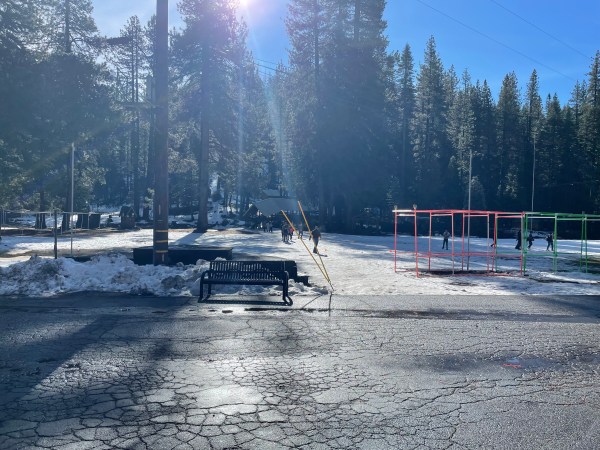
That weekend, I also encountered snow so a majority of the fun activities took place indoors. Yet, from what I heard from folks who went on the second weekend, there was no snow and students were able to engage in outdoors activities. Funny of how the weather changed so drastically in a week.
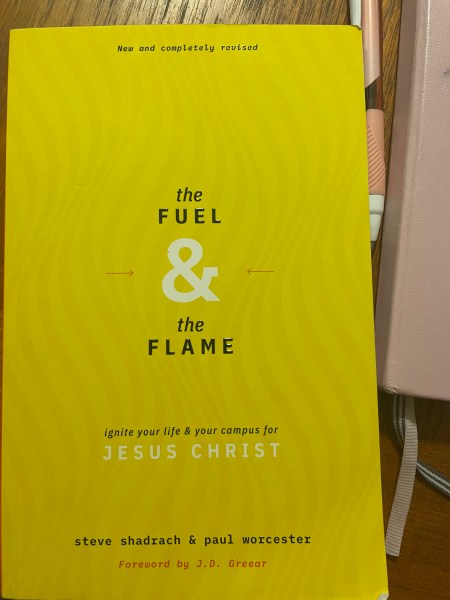
Anyway, busyness of this month aside, part of my NY resolution is to read more and I fought for that time. One of the books on my long overdue list is The Fuel and the Flame by Steve Shadrach and Paul Worcester. I started this book last year in July but only got around to finishing it much more recently.
Very late to this bandwagon but I felt very proud to finally getting around to finishing it. It was very much recommended by my church. Over the past summer, hearing from visiting speakers like Steve Shadrach or Keith Weiser–all veterans in college ministry, something that struck me was their sense of urgency and intentionality with college students in sharing the gospel and equipping them for evangelism. Even after being years and years out of college, they still retained a sense of wonder with reaching out to students and being genuinely excited to see what God could do. This is what convinced me to give this book a try.
Some Thoughts
Sorry, this is not going to be very organized.
So this book is about equipping yourself and others for college campus ministry and learning what it means to multiply disciples for Jesus. I’m not involved with college ministry but there was still some usage I found that I could personally apply with the people I’m trying to reach out to in my life–friends and the youth whom I’m entrusted with. This book was also a good gauge for me to check the level of my personal zeal for ministry was.
Reading through this also made me think about how I was personally reached out to and ministered to when I was in college. Remembering myself in college, I had very little evangelistic zeal. I was barely a Christian. I was not a multiplier. So much so that people were surprised to still see me around, even after I graduated from college.
The fact that I’m still here has been mentioned as evidence of proof of God’s miracles and unexpected faithfulness working out.
I’m not sure if I would be seen as the mentioned strategic target/person of peace on campus to reach out to but I’m glad things still worked out for me.
The ideas presented in this book aren’t completely revolutionary but I appreciate how down-to-earth it was. I still found application on how to live my life as a minister and how to reach out to my students, family, and coworkers.
This book is divided into two parts–The Fuel and the Flame. The fuel refers to what makes the character of a good disciple, or (referring to this past week’s MBS), what makes one a good vessel prepared for honorable work, useful to the master of the house. The flame refers to how disciple multiplication happens when another student/disciple catches on the vision.
I’ll talk about a few takeaways I had.
- They talk about the definition of compassion and how that was first seen with Jesus when he saw the crowds in Matthew 9. Something new I learned was that the Greek word for compassion means “to feel it in your gut.” Jesus felt a visceral reaction when he saw the lost sheep. He saw the urgency for these people to know the gospel.
Speaking as someone who is often lukewarm and not easily excited, I felt challenged to grow in and even pray for God to give me that same sense of compassion and have my heart break in the same way as His did when seeing the state of His people.
I do want to pray that prayer for myself. - I like how at the start of some chapters, there were anecdotes of different students who ended up unexpectedly turning to Christ or being a blessing upon their campuses. One story that I liked was Steve’s account of watching one student give one of the worst deliveries of the gospel he ever heard to his friends and bracing himself for the worst, only for each of that student’s friends to accept Christ one by one. It was only by the zeal and help of the Holy Spirit that something in that student’s gospel presentation spoke to his friends.
I do not have college students but I thought about my own youth students. Not so unlike one may feel around college students, I often find myself in the place of underestimating my students and what they could do. At least, it is stories like the aforementioned that challenges me to have higher vision for my own students.
A verse that often comes to mind is from 1 Tim 4:12, reminding me to not let anyone despise me for my youth but set an example in conduct and faith. I can’t discount myself as a minister but I can’t discount them either. - Again, probably a new idea but I was struck by the idea of everyday evangelism and seeing the mundane surroundings in my life as a mission field I’m entrusted with. Paul says that “evangelism is a lifestyle, not an event.” I like how simple he breaks it down that as long as there is a willingness and boldness to articulate our faith to someone else, that’s evangelism at work. He talks about maintaining a prayer/share/care list of people we want to reach out to, praying for opportunities to share, and planning regular times to hang out with non-Christians to reach out to.
It’s doable. Evangelism isn’t just limited to going out somewhere and talking to strangers or doing cold outreach or reaching out to local youths. It’s also being faithful to the people in my network–from family to coworkers as my mission field. I have them to pray for and continue to build relationships with. This inspired me to be more intentional the time I do spend with people who aren’t Christian in my life and grow in heart for them to see them with the same compassion God sees them.
Overall, this was a good read. This was a good reminder for myself to be a bit more bold and intentional about sharing my faith with others. I don’t need to be a college minister to grow a little bit more zealous. It felt a bit like a breath of fresh air to read something a little different after being steeped in youth ministry over the last couple of years.
On that note, make college ministry great again.
P.S. The associated podcast that Steve and Paul run (Campus Ministry Today) is also pretty good. My personal favorite episode so far was Episode 74 (Everyday is a Mission Trip), which helped me get into the right mindset before I visited Indo last year.

 Things Nicole Tried in 2024
Leave a comment